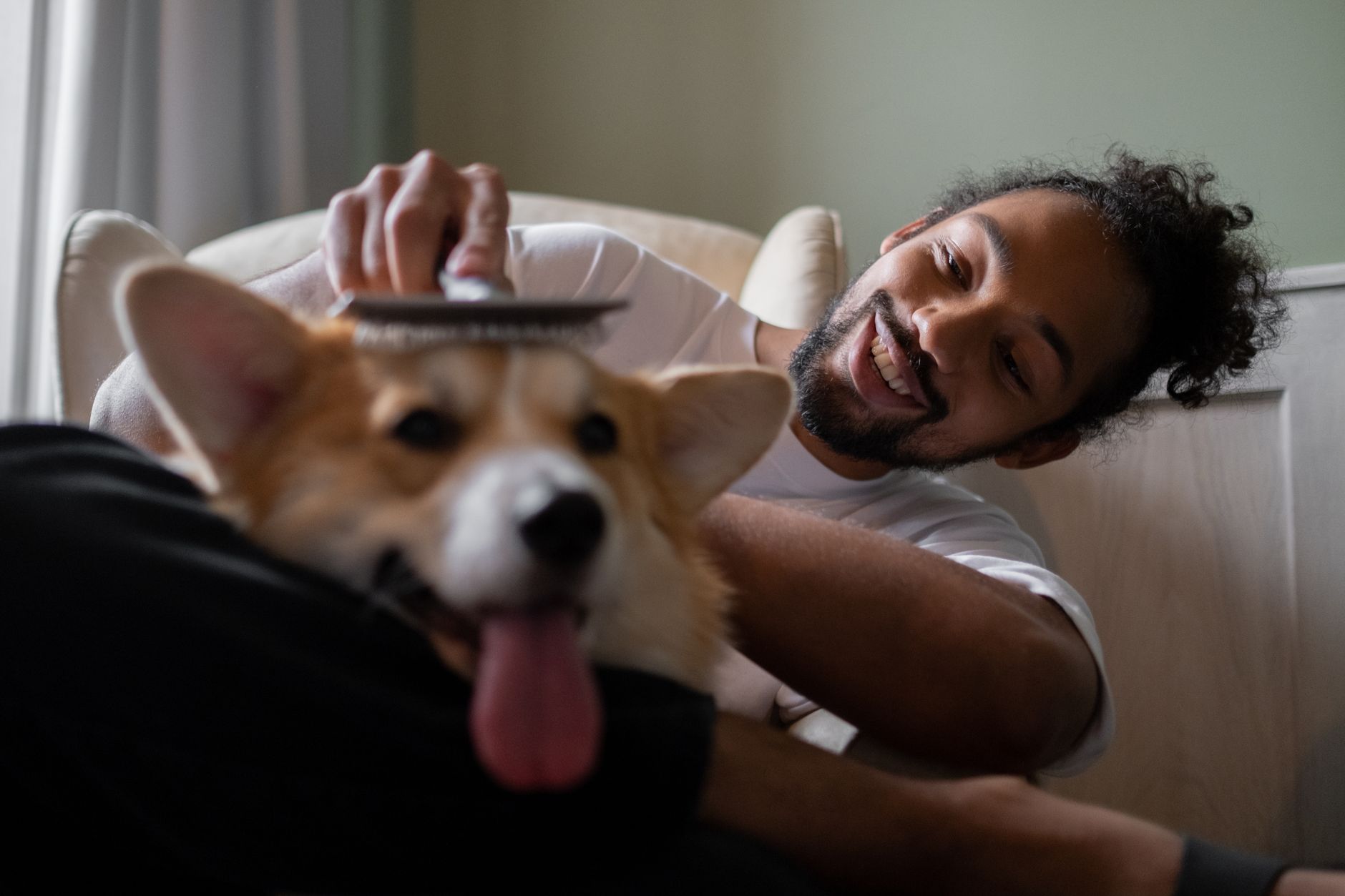
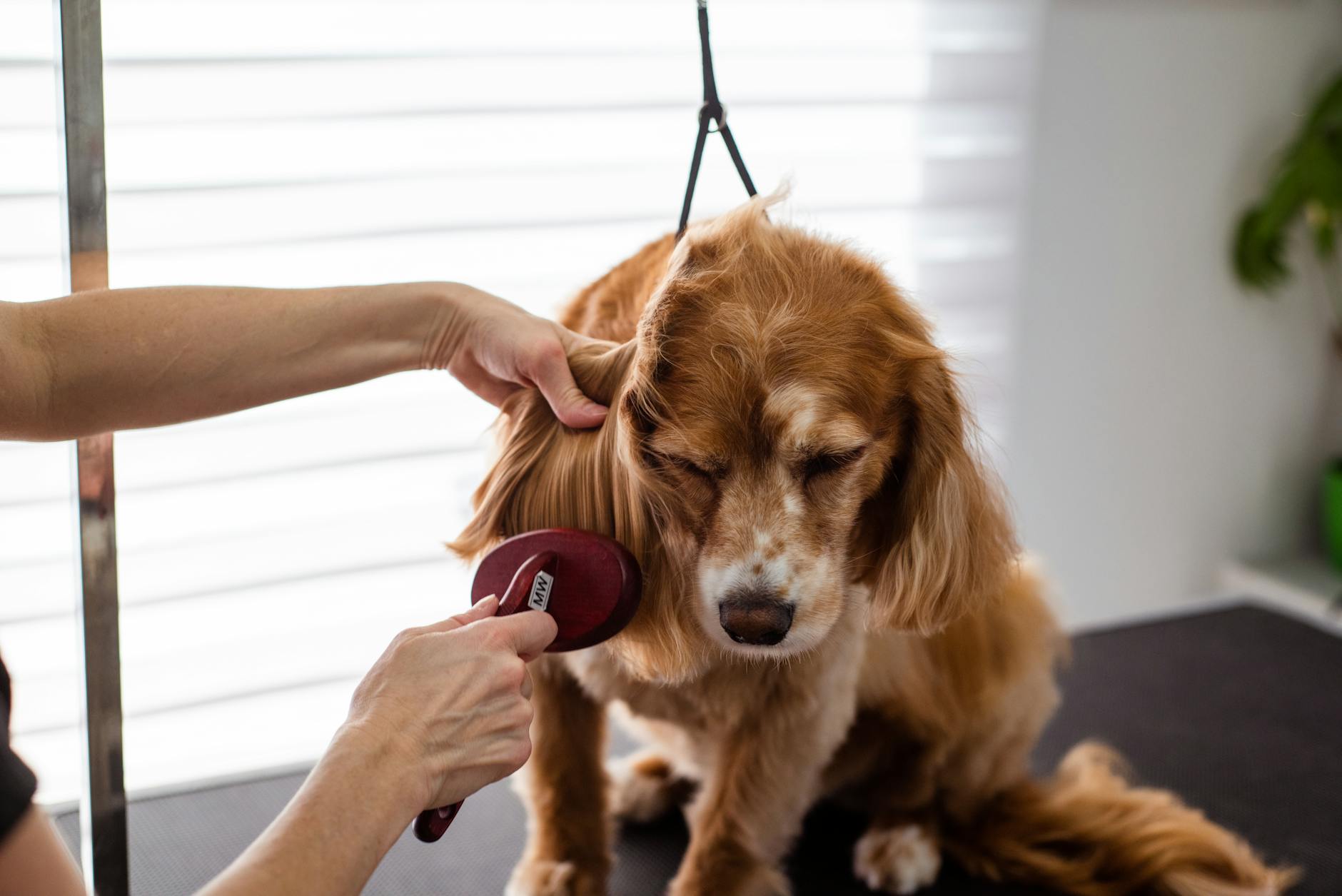
Heavy shedding and bald patches are not the same problem. Understanding the causes of dog shedding and bald patches starts with knowing the difference between normal coat turnover and follicle-level hair loss. When you can see bare skin in a defined area that is not filling back in, hair is not just coming out too fast — it has stopped growing back entirely. That means the follicle has stopped producing, and something is causing it. The good news: most causes are identifiable at home, and several are fixable without a vet visit. This article will help you work out which cause fits your dog before you decide what to do next.
Disclosure: This article contains affiliate links. If you purchase through these links, we may earn a small commission at no extra cost to you. As an Amazon Associate, we earn from qualifying purchases.
Normal Shedding vs. Abnormal Hair Loss: How to Tell the Difference
This distinction matters before anything else.
Normal shedding looks like this:
- Hair comes out evenly across the whole coat
- The skin underneath is fully covered and healthy
- No spot on the body looks visibly thinner than another
- Seasonal blowouts (common in double-coated breeds like Huskies or Shepherds) produce large volume but even coverage
Abnormal hair loss — what this article is about — looks like this:
- A defined area where you can see skin
- The patch is not filling back in over days or weeks
- The skin underneath may look red, scaly, greasy, darkened, or completely normal depending on the cause
- Hair may be breaking off at the surface rather than falling from the root
If you can put your finger on a spot of visible skin and that area is staying bare, this article is for you. That is not a grooming problem — it is a signal that something else is happening. If you are also dealing with a heavy overall coat loss alongside the patches, it is worth reading up on Do De-Shedding Shampoos Actually Work? What to Use and What to Skip to understand which grooming products genuinely help and which ones to avoid.
How to Check Your Dog’s Skin and Coat at Home
Before you can match a cause to what you are seeing, you need to actually look. Here is a simple examination you can do in a few minutes.
- Part the fur in the affected area using your fingers. You want direct skin contact with your eyes, not a view through the coat.
- Describe the skin: Pink and clean? Red or inflamed? Flaky or scaly? Dark and thickened? Greasy with an odour?
- Check the hair at the patch edge: Gently tug a few strands near the border. Do they come out easily or hold firm? Hair that pulls out at the root is different from hair that breaks at the surface — that distinction narrows the cause significantly.
- Look for secondary signs: Is the dog scratching, licking, or chewing at the area? Any smell, discharge, or crusting?
- Map the pattern: One circular spot? Symmetrical patches on both sides of the body? Loss concentrated on the belly, base of the tail, face, or inner legs?
- Check for parasites: Part the fur all the way down to skin and look for moving specks (fleas), dark gritty debris (flea dirt), or tiny crawling mites.
Write down or photograph what you find. The pattern and skin condition will match to a specific cause in the next section.
A self-cleaning slicker brush used carefully around the edges of a bald patch can help here — it reveals whether surrounding hair is loose and falling or firmly rooted, which helps you distinguish an active loss from a patch that is already starting to resolve. If you are unsure which tools and techniques are right for your dog’s coat type, Dog Grooming at Home: What You Actually Need and How Often covers the essentials in practical detail.
Common Causes of Dog Shedding and Bald Patches — What Each Pattern Means
The causes of bald patches in dogs are more varied than most owners expect, and each has a distinct pattern. Read through all of them — do not stop at the first one that sounds plausible.
1. Parasites — Fleas, Mites, or Mange
What it looks like: Patchy, often asymmetric loss. Demodectic mange frequently starts on the face and around the eyes. Flea allergy dermatitis often causes loss at the base of the tail and along the lower back.
Skin: Red, irritated, sometimes crusty. There may be a smell.
Dog’s behaviour: Intense scratching, rubbing against furniture, biting at skin.
Key signal: Flea dirt (tiny dark specks that turn reddish when wet) in the coat, or visible mites when parting the fur.
Flea-related hair loss happens because the dog’s immune system reacts to flea saliva — even one or two bites can trigger significant skin inflammation in a sensitive dog. Address fleas across the whole environment, not just on the dog.
2. Ringworm — Fungal Infection, Not a Worm
What it looks like: A classic circular patch with a defined, often raised edge. The hair breaks off at the surface rather than falling from the root.
Skin: Scaly, sometimes with a red ring at the outer edge.
Key signal: The circular shape and hair breakage (not root loss) are the giveaway.
Important: Ringworm is contagious — to other pets and to humans. If this pattern fits, keep the dog away from children and other animals and book a vet appointment. It is not an emergency, but it does need treatment and it does spread.
3. Skin or Environmental Allergies
What it looks like: Hair loss concentrated where the dog rubs or licks — face, paws, belly, groin, armpits.
Skin: Red, inflamed, sometimes moist from persistent licking.
Dog’s behaviour: Constant paw-licking, face-rubbing on carpet, scooting.
Key signal: Symptoms that worsen at certain times of year point toward environmental allergens like pollen or grass. Year-round symptoms are more consistent with food allergy (covered below).
4. Food Allergy or Nutritional Deficiency
What it looks like: Often a generalised thinning and dullness rather than sharp defined patches. The whole coat may look flat, brittle, or sparse.
Skin: May be flaky or oily.
Key signals: A recent food change preceded the coat decline, or the dog has been on a low-quality diet for an extended period. Deficiencies in protein, essential fatty acids, zinc, or biotin can all cause coat changes. If you are unsure whether your dog’s current food is nutritionally adequate, What to Feed Your Dog: A Practical Guide to Dog Nutrition is a useful starting point for evaluating what a complete diet should include.
If nutritional deficiency is among the suspected dog shedding bald patches causes and you cannot overhaul the diet immediately, an omega-3 skin and coat supplement — fish oil being the most common format — can support coat health in the short term while you address the underlying diet.
5. Hormonal Imbalance — Hypothyroidism or Cushing’s Disease
What it looks like: Symmetrical patches on both sides of the body — this bilateral pattern is the key signal. The coat may look dull or dry overall.
Skin: Often looks surprisingly normal under the bald area.
Dog’s behaviour: Weight gain, lethargy, increased thirst or urination (especially with Cushing’s disease, a condition involving excess cortisol production).
Key signal: Symmetry, no itching, and other whole-body changes alongside the hair loss.
This one cannot be confirmed at home. A blood panel is needed. If this pattern fits, book a vet appointment — it is not urgent, but it does need diagnosis.
6. Hot Spots — Acute Moist Dermatitis
What it looks like: A single, defined patch that looks wet, red, and sometimes oozing. Often appears suddenly.
Skin: Moist, may smell, sometimes has discharge.
Dog’s behaviour: The dog cannot leave it alone. Persistent licking or chewing at one spot.
Key signal: The dog created this by traumatising the skin through repeated licking or chewing. Something started the itch cycle — a flea bite, a small wound, an allergy — and the dog made it significantly worse.
7. Stress or Over-Grooming — Psychogenic Alopecia
What it looks like: Hair loss along the flanks, inner legs, or base of the tail — places the dog can easily reach. The pattern tends to be elongated rather than circular.
Skin: Often looks normal or only mildly irritated.
Dog’s behaviour: Repetitive licking with no obvious physical trigger.
Key signal: The skin is not reactive, but the hair is gone. A new stressor or routine disruption (new pet, move, owner absence) often preceded the onset.
When Excessive Dog Shedding and Bald Spots Need a Vet
This is not a blanket “go see a vet” section. These are the specific signals that should change your timeline.
Same-day or urgent:
- A hot spot that is spreading rapidly, oozing heavily, or the dog cannot stop traumatising the area
- Suspected mange — rapid spread, intense constant scratching, a dog that is losing condition quickly
- Hair loss combined with lethargy, vomiting, or a significant behaviour change
Book an appointment within a week or two:
- Circular, defined patches with hair breakage — ringworm spreads to people and pets
- Symmetrical bilateral patches with no itching — possible hormonal cause
- Hair loss that has not changed after two to three weeks of dietary or grooming adjustments
- A puppy with bald patches — young immune systems are less predictable and warrant earlier evaluation
What the vet will likely do:
- Skin scraping to check for mites
- Fungal culture to confirm or rule out ringworm
- Blood panel for thyroid levels or cortisol (Cushing’s)
- Possibly a referral to a veterinary dermatologist for complex or persistent cases
What You Can Do at Home While You Figure It Out
If you have done your skin check and either identified a likely benign cause or are waiting on a vet appointment, here is what is actually useful to do — and what to avoid.
Do not do these:
- Do not pick at or shave the patch. Shaving disrupts coat regrowth and makes it harder for a vet to assess the condition of the skin and hair.
- Do not apply medicated or antibacterial shampoo without a diagnosis. Choosing the wrong medicated shampoo can irritate reactive skin further or mask symptoms.
Do these instead:
- Keep the area clean and dry, especially if the skin looks moist or irritated. This matters most for hot spots, where moisture makes the inflammation significantly worse.
- Switch to a gentle, fragrance-free shampoo if the skin looks reactive. A mild hypoallergenic dog shampoo is the right starting point — it cleans without adding irritants while you work out the cause.
- Review the diet honestly. Is the dog on a complete, nutritionally adequate food? Has anything changed in the last few weeks?
- Check for and treat fleas across the whole environment — flea dirt on one dog means other pets and the home need attention too. Treating just the dog is not enough.
- Photograph the patch every three to four days. This documents whether it is growing, stable, or filling in — and it is genuinely useful information if you end up at a vet appointment.
- Reduce stress triggers if psychogenic alopecia seems likely. Increased exercise, enrichment toys, and keeping the routine stable can reduce the repetitive licking behaviour that drives this kind of hair loss.
Prevention: Keeping the Coat and Skin Healthy Long-Term
Most bald patches do not come out of nowhere. The dogs where problems are caught early are the ones whose owners are already paying attention to the coat and skin between baths.
- Regular brushing catches coat changes before they become visible bald patches — a thinning area is much easier to address when you notice it at the “dull and sparse” stage than at the “visible skin” stage.
- Consistent flea prevention is the single most effective way to prevent parasite-related hair loss. This applies year-round, not just in warm months, depending on your region.
- A nutritionally complete diet with adequate protein and essential fatty acids supports follicle health directly. The coat is one of the first places a dietary shortfall shows up.
- Do routine skin checks on heavy-coated breeds. The skin is hidden under dense fur in dogs like Bernese Mountain Dogs or Chow Chows — problems can develop and spread before they become visible from above. Parting the coat during a weekly brush takes 30 seconds and catches a lot.
Dog shedding bald patches causes are almost always identifiable when you know what to look for. The pattern, the skin condition, and the dog’s behaviour together point clearly to a cause. Work through that checklist before you panic — and before you reach for a product or pick up the phone to call the vet. In most cases, you will have a working theory within a few minutes of looking closely.
Frequently Asked Questions
Can stress cause bald patches in dogs?
Yes — and it is more common than most owners realise. When a dog repetitively licks or chews at an accessible area due to anxiety or stress, the mechanical trauma eventually causes hair loss. This is called psychogenic alopecia. The giveaway is that the skin in the affected area looks relatively normal or only mildly irritated — there is no obvious infection, parasite, or allergy driving the behaviour. The hair is absent because the dog removed it, not because the follicle stopped working. Common triggers include a new pet in the home, a change in the owner’s schedule, a house move, or any disruption to the dog’s established routine. Increased exercise, mental enrichment, and restoring routine stability are the first steps. If the behaviour is severe or persistent, a vet can assess whether behavioural support or medication is appropriate.
Why does my dog have a circular bald patch?
A circular, clearly defined patch where the hair has broken off at the surface — rather than falling from the root — is the classic presentation of ringworm. Despite the name, ringworm is a fungal infection, not a parasitic worm. The fungus infects the hair shaft and causes it to break close to the skin, leaving a roughly circular area of stubble or bare skin, often with a scaly or slightly raised edge. The reason this matters beyond just treating your dog is that ringworm is contagious — it can spread to other pets and to humans, particularly children. If the circular patch description fits what you are seeing, book a vet appointment rather than waiting to see if it resolves. A fungal culture will confirm it, and treatment is straightforward once diagnosed.
Will my dog’s bald patch grow back?
It depends almost entirely on the cause. For most benign causes — mild allergies, nutritional deficiency, stress-related licking, flea allergy, or a resolved hot spot — the follicle is intact and hair will regrow once the underlying cause is addressed. Regrowth is typically visible within four to eight weeks. Ringworm patches generally fill back in after successful treatment. Hormonal causes like hypothyroidism or Cushing’s disease are more variable: hair often regrows once the condition is medically managed, but it may take several months. The cases where regrowth is least likely involve scarring — if the skin has been severely traumatised or infected and scar tissue has formed, the follicles in that area may be permanently damaged. This is another reason not to let a hot spot go untreated, and not to allow a dog to continue traumatising an existing patch.
My dog is losing hair at the base of the tail — what does that mean?
Hair loss concentrated at the base of the tail and along the lower back is one of the most recognisable patterns in dog dermatology, and flea allergy dermatitis is the most common explanation. Dogs with flea allergies do not need a heavy flea burden to react — a single flea bite can trigger an immune response that causes intense itching and subsequent hair loss in this region. The dog scratches, chews, and rubs the area, accelerating the hair loss. Check thoroughly for flea dirt (dark gritty specks at the skin surface that turn red when wet on a damp tissue) and treat the entire environment. A secondary possibility for tail-base hair loss is a hot spot caused by the dog chewing at that area due to an initial irritant — a bite, a small wound, or general discomfort. If flea treatment does not resolve it within a few weeks, a vet appointment will help identify other causes.
Is it normal for a dog to shed in clumps?
Shedding in clumps is not automatically a problem, but the key question is whether skin is visible underneath. During a seasonal coat blow — which happens in double-coated breeds like Huskies, Malamutes, and German Shepherds — large clumps of undercoat come out rapidly and can look alarming. If you pull the clump away and the skin underneath is fully covered with a remaining coat, this is normal and expected. The concern with dog shedding and bald patches arises when clump loss leaves a visible, bare area of skin that is not immediately covered by surrounding hair. That is no longer a grooming event — it is hair loss with a cause that needs to be identified. If you are unsure, part the fur in the area where the clump came from and look directly at the skin. Healthy skin, full coverage: normal shedding. Visible bare skin: worth investigating using the checklist in this article.

Grooming, Care & Gear