By Lisa Park
Disclosure: This article contains affiliate links. If you purchase through these links, we may earn a small commission at no extra cost to you. As an Amazon Associate, we earn from qualifying purchases.
Knowing how to de-shed a dog at home is the difference between managing the problem and just reacting to it. Follow this routine consistently and you will notice a real difference within a month: less hair on your furniture and floors, a coat that looks fuller, and brushing sessions that get shorter each time. This is not about brushing harder — it is about working through a specific sequence that removes loose undercoat before it ends up on your couch. Brushing alone only catches hair that has already fully detached. The routine below addresses everything anchored underneath too.
Quick note: this guide covers healthy dogs with normal shedding. If your dog has bald patches, thinning areas, or sudden changes in coat density, that is a different situation that warrants its own investigation before grooming.
What De-Shedding Actually Does (and Why Brushing Alone Is Not Enough)
De-shedding means removing loose undercoat hair before it falls out on its own. It does not mean cutting, thinning, or altering the coat structure — just accelerating the natural release of dead undercoat.
Here is why a dry brush pass under-delivers: it only pulls out hair that has already fully separated from the follicle. Plenty of dead undercoat is still loosely anchored and will not budge until something helps break that bond. Warm water and a de-shedding shampoo do exactly that — they open the hair follicle slightly and loosen the connection between dead undercoat and skin. This is why bathing first dramatically increases how much your brush pulls out afterward.
Drying method matters just as much. A high-velocity dryer physically blows loose hair out of the coat before you even pick up a brush. By the time you start brushing, a significant portion of the loose undercoat is already gone. This is why the order of steps in this routine is not arbitrary — each one sets up the next.
What You Need Before You Start Your At-Home De-Shedding Routine
You do not need a salon’s worth of gear. You need the right gear for each stage of the process.
- De-shedding or undercoat shampoo — formulated specifically to loosen undercoat during the bath. Look for something moisturizing and coat-safe, not a stripping formula. A good deshedding shampoo is genuinely central to this method and is not interchangeable with a standard dog shampoo. If you want a deeper look at how these products compare and which ones are worth skipping, Do De-Shedding Shampoos Actually Work? What to Use and What to Skip breaks it down in detail.
- Conditioner or de-shedding conditioner — softens the coat so your tools glide through cleanly without snapping guard hairs. Medium and long coats need this. Short coats often do not.
- Slicker brush — for the pre-bath pass and surface debris. A self-cleaning slicker brush makes this stage faster by letting you clear collected hair with a button press rather than picking it out by hand.
- Undercoat rake or de-shedding tool — the core tool for removing loose undercoat. Which one depends on your dog’s coat type; rather than re-cover that ground here, refer to the tool comparison article for detail on matching tool to coat.
- Metal comb — final check to confirm nothing is left behind.
- Non-slip mat and a drain cover/hair catcher — practical additions that save cleanup time and protect your drain.
Step-by-Step: How to De-Shed a Dog at Home
Step 1: Pre-Brush Before the Bath
Use a slicker brush to work through the coat before any water touches it. Remove surface tangles and any matted areas.
Why this matters: Water tightens mats. A tangle that takes 30 seconds to brush out dry can take 10 minutes to work through wet — or require cutting. A quick pre-brush pass prevents that entirely.
Success marker: No clumps or resistance. The coat feels smooth and open.
Step 2: Wet the Coat Thoroughly
Use warm — not hot — water. Take real time on this, especially with thick double coats. You want water saturated all the way down to the skin, not just the top layer of guard hairs.
Why this matters: Loose undercoat release depends on the coat being fully saturated. A dog that looks wet on top but is still dry underneath will not respond to the shampoo the way you need it to.
Success marker: When you squeeze a section of coat, water runs clear from root to tip with no dry patches.
Step 3: Apply De-Shedding Shampoo and Work It Through
Apply shampoo from neck to tail and work it in with your fingers, pressing through the guard hairs to reach the undercoat layer. Let it sit for 3–5 minutes before rinsing — check the product label, but do not skip the dwell time.
Why this matters: The formula needs sustained contact with the undercoat to loosen anchored dead hair. Lathering and immediately rinsing cuts that process short.
Success marker: During the massage, you can feel loose hair releasing under your fingers. That is normal and a good sign.
Step 4: Condition If the Coat Warrants It
Apply conditioner to medium and long coats. Double-coated dogs benefit from a light conditioner even if the coat seems fine — it prevents breakage during the brush stage. Short single-coated dogs (think Boxers or Beagles) can usually skip this step.
Why this matters: A dry, rough post-bath coat causes de-shedding tools to snag and snap live guard hairs rather than slide under and pull loose undercoat. Conditioning is not about softness — it is about protecting the coat during the work that follows.
Step 5: Rinse Completely
Rinse until the water runs clear and you feel no slipperiness remaining at the skin level. Check behind the ears, under the collar area, and along the belly.
Why this matters: Shampoo or conditioner residue left in the coat can irritate skin, cause itching, and dull the coat over time. A thorough rinse takes longer than you think.
Step 6: Towel Dry, Then Use a High-Velocity Dryer If You Have One
Blot with a towel first to pull out bulk water. Then, if you have a dog dryer, work through the coat on a low or medium setting, directing the airflow with the direction of coat growth.
If you do not have a dog dryer: let the coat air-dry fully in a warm space before brushing. Do not brush a wet or damp coat on double-coated or long-haired dogs — it causes breakage and can create new tangles.
Why this matters: The dryer physically separates and ejects loose hair before you pick up a brush. In practice, the brush yield on a force-dried coat is noticeably higher than on an air-dried one. This step alone is why many owners eventually invest in a dedicated dog dryer when learning how to de-shed a dog at home effectively.
Success marker: When you run your hand against the coat, visible loose hair lifts. The coat looks open and full — not matted, damp, or flat.
Step 7: Brush in Sections With an Undercoat Rake or De-Shedding Tool
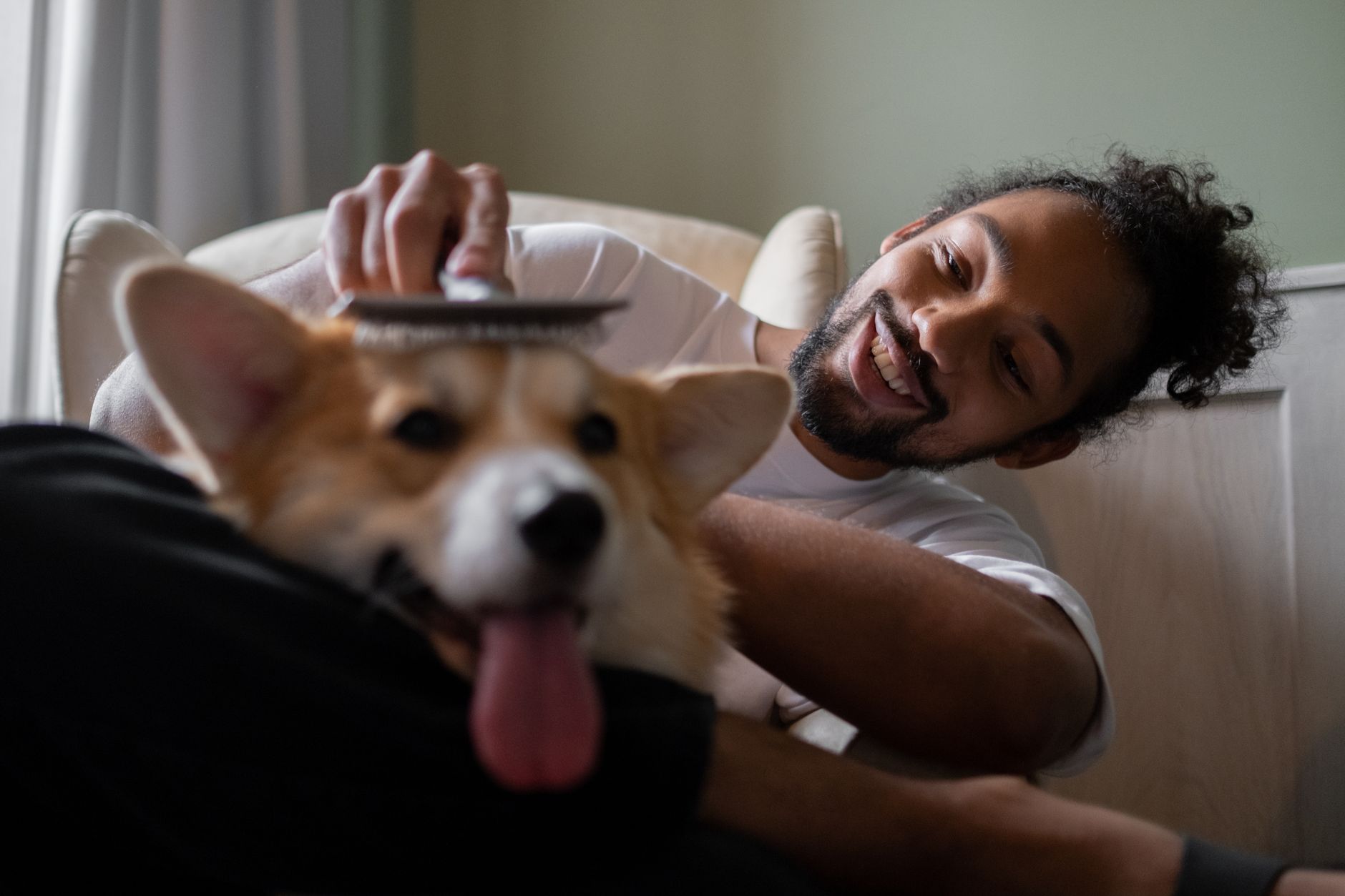
Work in systematic sections — start at the hindquarters and move forward toward the head. Use long, firm strokes following the direction of hair growth. On double-coated breeds, lift the top coat slightly to make sure you are reaching the undercoat layer beneath the guard hairs. Note that single-coated dogs (such as Labs or Beagles) do not have a true undercoat to lift through — brush in firm, flat strokes with the coat growth rather than trying to work beneath a layer that is not there.
Why this matters: Loose undercoat is distributed throughout the entire coat. Working section by section ensures nothing is skipped. The first pass on each section will yield the most hair; each subsequent pass yields less.
Success marker: After 3–4 passes on a section, the brush comes away nearly clean. Move to the next section when that happens.
Step 8: Finish With a Metal Comb
Run a metal comb through the full coat from root to tip. Pay particular attention to behind the ears, around the collar area, and at the hindquarters — these are the zones where undercoat packs tightest and is most easily missed.
Why this matters: The comb catches anything the brush missed and gives you a definitive confirmation that the coat is cleared. If the comb drags or clumps, that area needs more brush work.
Success marker: The comb passes through the entire coat with no resistance or pulling.
How Often to Run This Routine Based on Your Dog’s Coat Type
Understanding how to de-shed a dog at home is only half the equation — running the routine at the right frequency is what produces lasting results.
Double-coated heavy shedders (Huskies, Golden Retrievers, German Shepherds, Corgis):
- Full bath-dry-brush routine every 4–6 weeks
- Brush-only maintenance sessions 1–2 times per week between baths
- During seasonal coat blowing (heavy shedding periods in spring and fall): increase full sessions and move to daily brushing
Single-coat moderate shedders (Labs, Boxers, Beagles):
- A weekly brush-through is sufficient maintenance between sessions
- Increase frequency in spring and fall for breeds that shed seasonally
Low-shedding or minimal undercoat dogs (Poodles, Maltese, Bichon Frisé):
- This full de-shedding routine is largely unnecessary for these coat types
- Standard grooming and brushing frequency applies — see Dog Grooming at Home: What You Actually Need and How Often for guidance specific to these coats
Common De-Shedding Mistakes That Make Shedding Worse
1. Brushing a completely dry coat and skipping the bath. You will remove surface hair, but the bulk of the loose undercoat stays put. The bath is not optional — it is what makes the brush pass actually work.
2. Skipping conditioner on long or double coats. Over time, this causes guard hair breakage and a progressively worse coat texture. The damage is cumulative and not always obvious session to session.
3. Brushing a wet coat on double-coated dogs. This causes breakage and can create new tangles in a coat you just spent time clearing. Wait until the coat is fully dry.
4. Only brushing the top layer. If your strokes are skimming the surface, you are not reaching the undercoat. Lift the guard hairs on double-coated breeds and work underneath them.
5. Going too hard with a de-shedding tool for too long in one spot. Over-working one area in a single session can irritate the skin — sometimes called “Furminator burn.” The tool comparison article covers correct pressure and technique in more detail.
6. Expecting one session to clear weeks of accumulated undercoat. The first session after a long gap will always yield the most hair and take the longest. That is normal. Each subsequent session gets faster and lighter. Part of learning how to de-shed a dog at home is calibrating expectations for that first session.
When Home De-Shedding Is Not Keeping Up — And What to Do Next
If you are running this routine consistently and still losing an unmanageable amount of hair, look at two things before anything else: diet and timing.
A coat that sheds excessively despite regular grooming can be a sign that the diet is not providing adequate omega-3 and omega-6 fatty acids. These support skin barrier function and coat health from the inside. If your dog’s food is lower quality or the coat looks dull even after thorough grooming sessions, a skin and coat supplement can fill the gap. This is not something every dog needs — but for dogs whose coat is not responding to the routine the way it should, it is worth trying before assuming the grooming method is the problem.
If the shedding has changed suddenly, increased significantly, or is accompanied by bald spots, a dull coat, or skin irritation, that is a different situation — a vet visit is warranted rather than an adjustment to your at-home dog deshedding routine.
A professional groomer with a high-velocity dryer and forced-air drying setup can strip out an accumulated undercoat in a single session. This is genuinely useful as a reset if you are starting from a long backlog before committing to a home maintenance schedule.
One thing that will not help: shaving a double coat. It does not reduce shedding and can permanently alter coat texture and the dog’s ability to regulate temperature. That topic is covered in more depth in the seasonal undercoat article.
What Success Looks Like After One Month
Stick to this routine and within a month you will see noticeably less hair on floors and furniture, a coat that looks fuller and healthier between sessions, and brushing passes that take a fraction of the time they did in the first session. The accumulated undercoat clears across the first two or three sessions, and from there it becomes genuine maintenance — lighter each time. Knowing how to de-shed a dog at home properly transforms what feels like a losing battle into a manageable routine. This is a system, not a one-time fix, but the results compound quickly once you are consistent.
Frequently Asked Questions
Can I de-shed my dog without a bath? You can brush out some loose surface hair without bathing, but you will miss the bulk of the anchored undercoat. The bath — and specifically the de-shedding shampoo with its dwell time — is what loosens hair that a dry brush cannot reach. Skipping it is the most common reason an at-home dog deshedding routine underdelivers.
Can I use a human hairdryer instead of a dog dryer? A human hairdryer is not equivalent to a high-velocity dog dryer. Human dryers use heat to evaporate moisture; dog dryers use high-volume airflow to physically force loose hair out of the coat. A human dryer also runs hotter than is safe for close, sustained use on skin. It will dry the coat, but it will not produce the same pre-brush yield as a proper dog dryer.
Why does my dog still shed so much right after I de-shed them? A single session does not remove all loose undercoat — particularly if there has been a long gap since the last grooming. The first session after a break will always yield the most and leave some behind. The coat releases in stages, which is why the second and third sessions in a consistent routine are noticeably lighter. Some shedding in the days following a session is also normal as the remaining loosened hair works its way out.
Can I de-shed a puppy the same way? Puppies have softer, single-layer coats until their adult coat grows in, usually between 6 and 12 months depending on the breed. The full de-shedding routine — particularly aggressive undercoat tools — is not appropriate for puppies. Use a soft slicker brush and gentle handling to get puppies comfortable with the grooming process, and transition to the full routine once the adult coat is established.
What is the difference between de-shedding and stripping? De-shedding removes loose, dead undercoat that the dog is already releasing naturally. Stripping is a specific technique used on wire-coated breeds (like terriers) that removes the dead outer guard hairs by hand or with a stripping knife to maintain coat texture. They address different coat types and different problems — if your dog is a double-coated or single-coated shedder, the de-shedding routine in this guide applies.
Does de-shedding shampoo actually work, or is it just regular shampoo? A properly formulated de-shedding shampoo is meaningfully different from a standard shampoo. The formula is designed to penetrate the coat and loosen the bond between loose undercoat and the follicle, and it requires dwell time to do that. Standard shampoo cleans the coat but does not have that effect on the undercoat. The dwell time step — 3 to 5 minutes before rinsing — is where the difference shows up.
Should I de-shed my dog indoors or outdoors? Outdoors is easier for cleanup during the brushing stages, particularly for heavy-shedding breeds where a single session can produce an impressive volume of loose hair. Bathing indoors in a tub gives you more control over water temperature and rinsing. A common approach is to bathe indoors, then move outdoors for the drying and brushing stages if the weather allows.
How long does a full de-shedding session take? For a double-coated heavy shedder, a thorough home de-shedding session — including bathing, drying, and brushing — typically takes 60 to 90 minutes. Single-coated moderate shedders usually run 30 to 45 minutes. The first session after a long gap will take longer than subsequent maintenance sessions, which become progressively faster as accumulated undercoat clears.
Grooming, Care & Gear