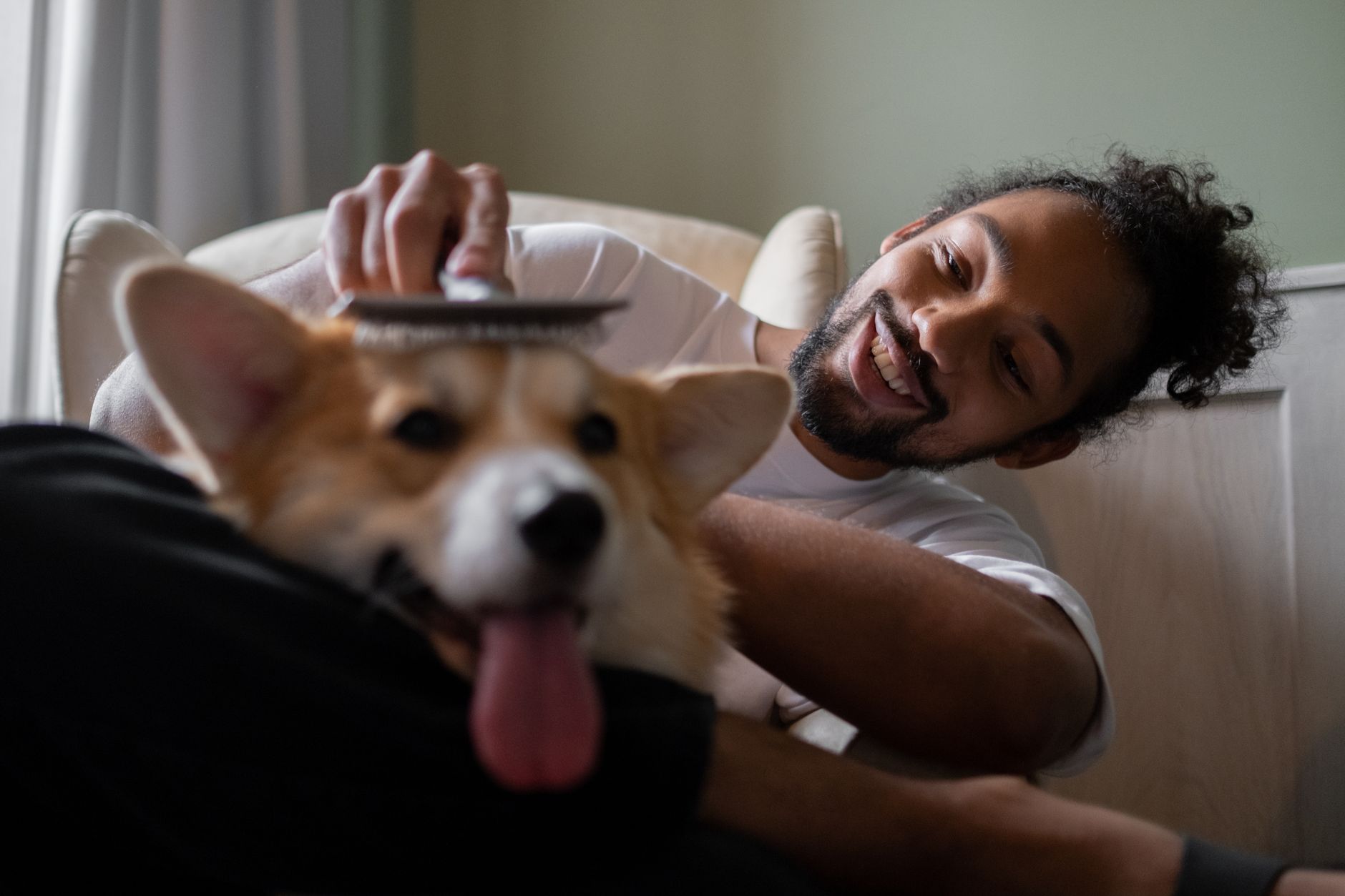

If you’re wondering why is my dog shedding so much right now, you’re in good company — it’s the number one grooming complaint from dog owners. The good news: most of the time, excessive dog shedding has a clear, owner-addressable cause. It’s not automatically a health crisis.
This article covers seven of the most common reasons dogs shed more than normal, ranked from most benign to worth keeping an eye on. Each cause gets a plain explanation and a practical action. What this article does not cover: bald patches and visible coat thinning (that’s a separate diagnostic topic) and the full mechanics of seasonal coat blowing in double-coated breeds (that deserves its own deep-dive). Both are referenced below where relevant.
Disclosure: This article contains affiliate links. If you purchase through these links, we may earn a small commission at no extra cost to you. As an Amazon Associate, we earn from qualifying purchases.
Why Is My Dog Shedding So Much? Start With These 7 Causes
1. Seasonal Shedding — The Most Likely Culprit
Seasonal shedding is the single most common reason dogs shed more than normal, and it’s completely expected. Changes in daylight hours — not temperature — signal hair follicles to cycle out old coat. In spring, dogs shed their heavier winter coat. In fall, they drop summer coat to make room for the denser winter growth.
Double-coated breeds like Huskies, Labs, and Golden Retrievers experience a more dramatic version of this called coat blowing. The dense undercoat sheds out in large clumps over two to four weeks. Single-coated breeds still show seasonal spikes — just less dramatically.
What to do: Increase brushing frequency during peak weeks. A good deshedding brush or undercoat rake makes a significant difference in managing how much ends up on your furniture versus getting caught in the tool. If you have a double-coated dog, a FURminator deShedding tool is the standard recommendation for reaching and removing loose undercoat without damaging the topcoat — use it sparingly during peak shedding weeks. If you want a budget-friendly option that works across most coat types, a self-cleaning slicker brush with retractable bristles makes cleanup between sessions much faster. If you have a double-coated dog, the coat blowing process has its own strategy worth reading about separately.
2. Suboptimal Diet or Nutritional Gaps
The coat is one of the first places a poor diet shows up. Dogs eating low-quality food with generic fillers, insufficient protein, or the wrong balance of fats often develop a dull coat, dry flaky skin, and increased shedding — sometimes before any other symptoms appear.
The nutrient most often tied to excessive shedding is the omega-3 to omega-6 fatty acid ratio. These fats support skin barrier function and hair follicle health. Many budget dry kibbles are heavy on omega-6s from plant oils but low on the omega-3s (EPA and DHA) that come from fish-based ingredients.
What to do: Check your dog’s food ingredient list. The first ingredient should be a named protein source, and the fat profile should include fish oil or fish meal. If the food checks out but your dog is shedding so much that it’s still a problem, adding a skin and coat omega supplement is one of the more well-supported at-home interventions for coat quality. Look for supplements with EPA and DHA specifically, not just generic “fish oil” marketing language.
3. Dehydration — Simple, Overlooked, and Fixable
Dogs that don’t drink enough water develop drier skin. Dry skin causes hair shafts to become brittle and detach more easily from follicles. This is especially common during hot months and in dogs eating primarily dry kibble, which has almost no moisture content compared to wet food.
Many dog owners don’t realize how much their dog’s water intake fluctuates seasonally — or how directly skin hydration connects to shedding levels. You can do a quick self-check: press your dog’s gums gently. They should feel moist and slippery, not tacky or dry. You can also try the skin tent test — gently pinch the skin at the back of the neck and release. It should snap back immediately. If it doesn’t, your dog may be mildly dehydrated.
What to do: Make sure clean, fresh water is always available and refilled regularly — dogs often refuse stale water. Adding moisture to meals is an easy way to increase daily fluid intake. Try a spoonful of wet food or a splash of low-sodium bone broth mixed into kibble. This is a simple fix that can noticeably reduce shedding within a few weeks.
4. Stress or Anxiety
This one surprises a lot of owners, but stress is a real cause of increased dog shedding — and it has a clear biological explanation. Cortisol (the primary stress hormone) interferes with the normal hair growth cycle. It pushes more follicles into the shedding phase at the same time. Acute stress events — a vet visit, a thunderstorm, boarding, travel, or a new pet or person in the home — can trigger a short-term surge. Chronic stress has a longer-lasting effect on coat health.
If you’ve ever noticed your dog leaving a trail of fur at the vet’s office or during a car ride, that’s this mechanism in real time.
What to do: Identify and reduce the stressor where possible. For ongoing anxiety — separation distress, noise phobia, generalized fearfulness — some owners find that calming supplements with L-theanine or melatonin or a calming pheromone diffuser help take the edge off without sedation. These won’t eliminate the cause, but reducing baseline anxiety over time does have a real effect on coat health.
5. Bathing Too Often — or With the Wrong Shampoo
Over-bathing strips the natural oils that keep skin supple and coat strong. When those oils are gone, skin dries out, hair becomes brittle, and shedding increases. Using human shampoo on a dog makes this worse. Human formulas are pH-balanced for human skin, which is more acidic, and they consistently irritate dogs’ skin with repeated use.
Most dogs with normal coats and no skin conditions don’t need a bath more than once every four to six weeks. Bathing more often than that — or with a harsh formula — creates a dry-skin cycle that takes weeks to correct.
What to do: Switch to a dog-specific shampoo with moisturizing ingredients. Look for oatmeal, aloe, or coconut-derived cleansers on the label. If your dog is shedding so much that you want faster relief, a deshedding shampoo designed to loosen and release undercoat during the bath can reduce post-bath fur fallout significantly. If you’re unsure whether a specialty formula is worth it, Do De-Shedding Shampoos Actually Work? What to Use and What to Skip breaks down which products deliver real results and which ones to avoid. It’s one of those tools that does something noticeably different from a regular shampoo in practice.
6. Hormonal Changes
Intact (unspayed) female dogs shed more heavily during heat cycles and after whelping. These are predictable, cyclical spikes tied directly to hormonal fluctuations — not a sign that something is wrong. Spayed and neutered dogs sometimes develop a change in coat texture or density in the months following surgery as hormone levels stabilize.
More concerning is shedding that follows a hormonal pattern but can’t be explained by reproductive cycles. Hypothyroidism and Cushing’s disease both affect coat health significantly. Hypothyroidism means an underactive thyroid. Cushing’s disease means excess cortisol production. Both almost always come with other signs: lethargy, weight changes, increased thirst, or skin thickening.
What to do: For intact females, expect shedding spikes around heat and after pregnancy, and increase brushing during those periods. If you’re seeing hormonal-pattern shedding alongside any of the symptoms above, that’s worth a vet conversation. It’s not urgent, but it’s not something to watch indefinitely without getting a baseline blood panel.
7. Fleas, Mites, or Skin Irritation
Parasites and skin irritation don’t need to cause bald patches to drive up shedding. Scratching, biting, and rubbing mechanically dislodge hair — and itchy dogs do a lot of all three. Flea allergy dermatitis (FAD) — where the dog reacts to flea saliva rather than the flea itself — is one of the most common culprits. A dog with FAD can shed and scratch heavily even if you never see an actual flea on them.
Mites (mange) and contact dermatitis from environmental allergens can produce similar patterns of scratching-driven hair loss before anything looks visibly abnormal on the skin.
What to do: Check the coat and skin closely, especially at the base of the tail and inner thighs — classic flea hotspots. Make sure your flea and tick prevention is current and applied on schedule. If you’ve let flea prevention lapse and your dog is shedding more than normal, restarting prevention is the first practical step before assuming anything more complex.
Is Your Dog Shedding Too Much — Or Is It Normal?
Most cases of dog shedding more than normal are benign. Here’s how to read the situation:
- Normal: Even, all-over shedding with no skin changes, no behavioral shifts, coat still looks full and healthy. Pick a cause from the list above and address it.
- Watch: Dramatic increase over a short period, coat feels dull or brittle to the touch, dog is scratching or licking more than usual. Monitor for two to three weeks. Try dietary and grooming adjustments.
- Act: Visible thinning, bald patches, redness, sores, odor from the skin, or any behavioral change alongside shedding — lethargy, increased drinking, appetite change. This warrants a vet visit. The bald patches diagnostic article covers the escalation signs in detail.
Daily and Weekly Habits That Actually Reduce Dog Shedding Over Time
These aren’t a full grooming routine — they’re the habits that move the needle on shedding specifically:
When Your Dog Is Shedding So Much That It’s Time to See a Vet
Most excessive dog shedding causes are owner-addressable and not medically urgent. But there are specific situations where shedding signals something that needs professional attention:
- Shedding is accompanied by visible skin changes — redness, flaking, sores, or a strong skin odor
- Bald patches are appearing or the coat is visibly thinning in patches
- Shedding increased alongside lethargy, weight change, or noticeably increased water consumption
- Scratching or licking is so intense the skin is broken or raw
- The onset was sudden and dramatic with no seasonal, dietary, or environmental explanation
If any of those apply, stop troubleshooting at home and get a vet to look at the skin and run a basic panel. Hypothyroidism, Cushing’s, and skin infections are all very treatable once identified. But they don’t resolve with a better brush.
The Short Version
If you’re asking why is my dog shedding so much, the answer is usually mundane: it’s the season, the food isn’t ideal, they’re not drinking enough, or the shampoo is wrong. Work through the seven causes above in order of likelihood for your dog’s situation. Make one change at a time, and give it three to four weeks before expecting visible coat improvement. If the coat doesn’t recover with those adjustments — or if anything on the “act” list applies — that’s when the vet becomes the right next step.
Frequently Asked Questions
Is it normal for dogs to shed year-round? Yes. All dogs shed to some degree throughout the year. Shedding typically ramps up in spring and fall as daylight changes trigger the hair growth cycle. If your dog is shedding so much that it seems constant, diet, hydration, and bathing habits are the first things to check.
Can stress really cause dogs to shed more? It can. Cortisol — the hormone released during stress — disrupts the normal hair growth cycle and pushes more follicles into the shedding phase at once. This is why dogs often shed noticeably at the vet or during travel. Chronic stress causes longer-term coat thinning.
Does fish oil actually help with dog shedding? It often does, yes — but the quality matters. Look for a supplement with EPA and DHA specifically. These omega-3 fatty acids support skin barrier function and hair follicle health. Generic “fish oil” products vary widely in actual EPA and DHA content, so check the label before buying.
Can food allergies cause excessive shedding in dogs? Yes. Food allergies or sensitivities — commonly to chicken, beef, wheat, or dairy — can cause skin inflammation that leads to increased shedding. If your dog is shedding excessively alongside itching, paw licking, or recurring ear issues, a food allergy is worth investigating with your vet.
Should I shave my dog to reduce shedding? Generally no. Shaving doesn’t stop shedding — the hair grows back and sheds at the same rate. For double-coated breeds, shaving can actually damage the coat’s natural insulation and protective function. Regular brushing and a deshedding tool are far more effective at managing loose fur without the downsides.
Grooming, Care & Gear