If you’ve started looking into positive reinforcement puppy training, you’ve probably also encountered the opposing view — that puppies need firm corrections to learn respect, that rewarding every behavior creates a spoiled dog, or that “positive only” trainers are just being soft. These are common assumptions, and they’re worth taking seriously rather than dismissing. This guide walks through what reward-based puppy training actually is, what corrections do to a developing puppy, and — most importantly — how this plays out in real, everyday training situations.
Disclosure: This article contains affiliate links. If you purchase through these links, we may earn a small commission at no extra cost to you. As an Amazon Associate, we earn from qualifying purchases.
What Positive Reinforcement Puppy Training Actually Means
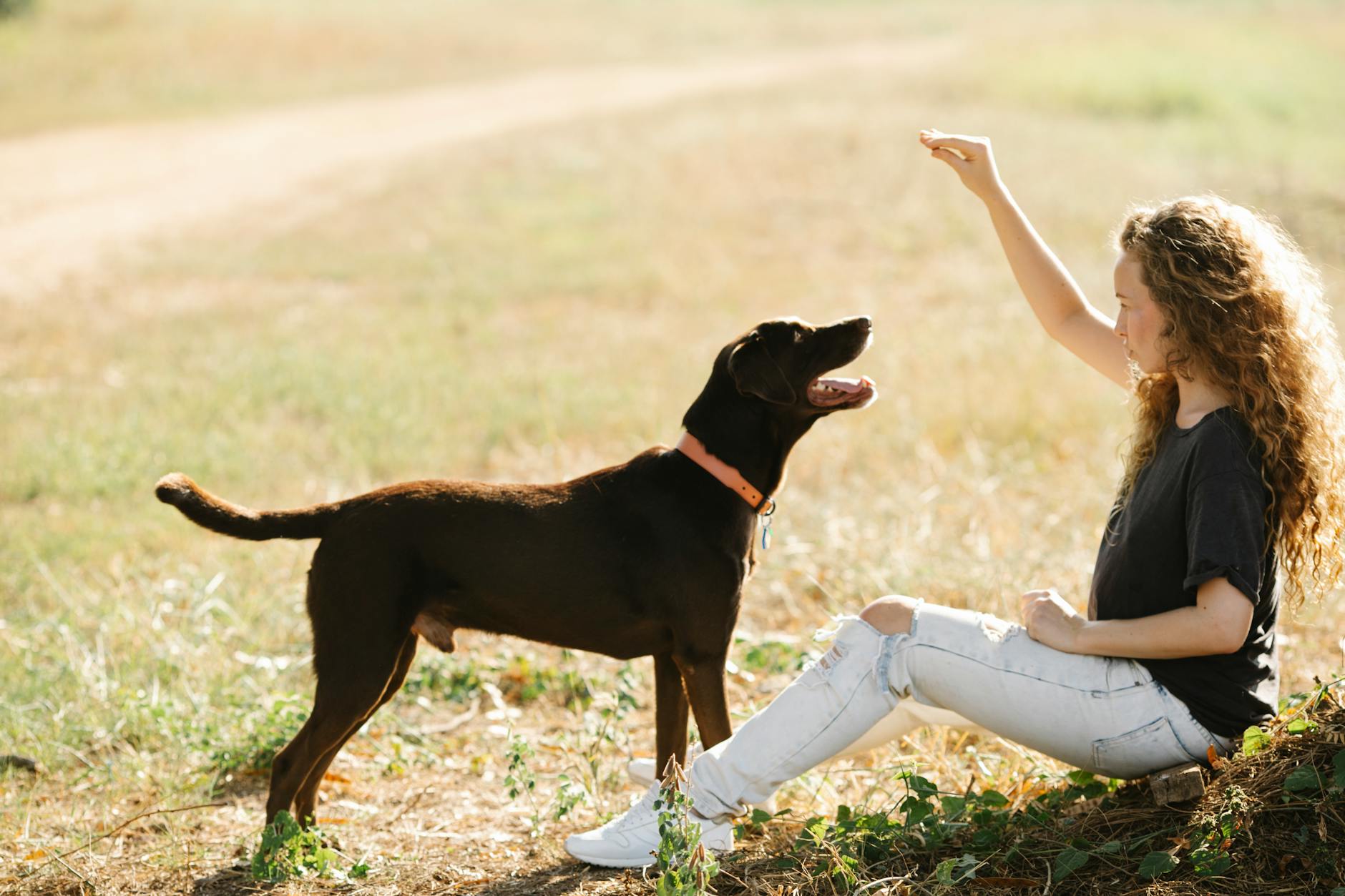
The first thing to understand is that positive reinforcement has a precise definition. It means adding something the dog wants — immediately after a behavior — in order to make that behavior more likely to happen again. That’s it. The “positive” part doesn’t mean cheerful or permissive. It means something is added (as opposed to removed).
What it is not:
- Bribery — Bribery means showing the reward before asking for the behavior. Reinforcement comes after.
- Permissiveness — Reinforcing the right behavior is not the same as ignoring the wrong one. Management and redirection handle that.
- Ignoring problems — Reward-based puppy training absolutely addresses unwanted behavior. It builds the behavior you want instead of punishing the one you don’t.
A correction, by contrast, falls under positive punishment. It adds something unpleasant after a behavior to reduce it. Common examples in puppy training include leash pops, scruffing, verbal reprimands, spray bottles, and startling noises. Owners reach for these instinctively because they produce a visible reaction, which feels like feedback. The problem is what they actually teach — which we’ll get to shortly.
The debate between these two approaches isn’t about being nice versus firm. It’s about what actually transfers information to a puppy’s brain. Understanding When to Start Training a Puppy: The Best Age Window and What Happens If You Wait is also essential context here, since the approach you choose matters most during those earliest developmental windows.
The Role of Markers (Clickers and Marker Words)
A marker is a precise signal — either a click from a button-style training clicker or a short spoken word like “yes” — that tells your puppy exactly which behavior earned the reward. There’s always a gap between the moment the behavior happens and the moment you can deliver the treat. The marker bridges that gap.
Timing matters more with puppies than with adult dogs. Their attention windows are shorter. Their ability to connect events across time is still developing. A reward that arrives three seconds late may reinforce whatever the puppy is doing at that moment — not the behavior you intended. Choosing the right rewards is just as important as timing — see Best Training Treats for Puppies: What Actually Works and What to Avoid for guidance on what actually motivates puppies during these early sessions. If your puppy’s attention keeps drifting during sessions, Puppy Ignores You During Training: How to Get Focus Back Fast covers practical strategies for re-engaging them before the session falls apart.
A clicker is a simple, inexpensive tool that gives you a consistent, neutral sound with no emotional variation. Unlike your voice, it always means exactly the same thing. It’s worth having in your training kit, especially in the early weeks.
Why Corrections Backfire With Puppies (And What Happens Instead)
Puppy brains are genuinely different from adult dog brains. The areas responsible for impulse control and connecting cause and effect are still developing. When you correct a puppy, there’s a real chance they don’t connect the correction to the behavior at all. They just experience something unpleasant appearing near you.
Stress and fear also narrow learning. A puppy that’s been startled, confused, or anxious is not in a state where new information gets absorbed. Corrections push puppies into that state reliably.
Here’s what corrections tend to produce in practice:
- Shutdown and learned helplessness. The puppy stops trying. They become hesitant to offer any behavior because previous attempts resulted in discomfort. This can look like a “calm” puppy to some owners — but it’s actually a worried one.
- Redirected anxiety. Increased biting, barking, spinning, or frantic behavior. This often looks like defiance or over-excitement, but it’s a stress response.
- Damaged trust. The owner becomes a source of unpredictable discomfort. This doesn’t disappear when training is over. It follows the puppy into recall, handling, and social bonding.
To be clear: corrections aren’t evil, and an occasional sharp “ah-ah” to interrupt dangerous behavior is not going to wreck your puppy. The issue is structural. A correction tells a puppy what not to do but provides no information about what to do instead. A puppy who stops jumping because they received a knee to the chest has learned “don’t jump near this person when they’re watching.” That is not the same as learning that four paws on the floor earns good things — and the difference matters in every situation that isn’t identical to the original one. The same principle applies across all ages: Dog Behavior Problems and How to Solve Them Without Punishment shows how this approach scales beyond puppyhood into the full range of behavioral challenges dogs present.
How Positive Reinforcement Puppy Training Works: Real Examples
This is where the theory becomes practical. Each example below shows the behavior, the reinforcement strategy, and what the puppy actually learns — compared to what a correction produces.
Jumping Up
Puppy jumps → owner turns away, removes all attention → puppy’s four paws land on the floor → marker + treat.
The puppy learns: floor position produces good things. The behavior the owner wants gets reinforced.
Compare to: puppy jumps → knee to the chest → puppy is confused, tries again from a different angle, arousal builds. The puppy hasn’t learned what does work.
Pulling on Leash
Puppy hits the end of the leash → owner stops completely. Puppy releases tension and turns toward owner → mark + treat + walking resumes.
The puppy learns: loose leash equals forward movement. This is self-reinforcing once the pattern is established.
Compare to: leash pop → puppy is startled → arousal increases → pulling often worsens within seconds. Leash pops tend to raise the emotional temperature of walks rather than lower it.
Coming When Called
Puppy begins moving toward owner → mark mid-approach → big reward on arrival. Every recall ends positively.
The puppy learns: coming to you is the best thing that happens all day.
Compare to: puppy is called back only to have their leash clipped or be put in the crate. The recall word gets associated with things ending. Over time, the puppy starts avoiding it — a phenomenon sometimes called recall poisoning.
Not Chewing Furniture
Puppy is redirected to an appropriate chew toy → mark + praise when they engage with it.
The puppy learns: this object earns reward.
Compare to: spray bottle when caught chewing furniture → puppy learns to chew when the owner isn’t in the room. The behavior doesn’t go away. It just moves out of sight.
Common Situations Where Reward-Based Puppy Training Outperforms Corrections
The overtired puppy. A puppy past their threshold is already struggling to regulate. Corrections escalate that state. Keeping treats to hand and redirecting to something simple — a sit, a sniff, a chew toy — lets you end a session on success rather than conflict.
The shy or sensitive puppy. Some puppies are cautious by nature. Even mild corrections can push them into a fear response that lingers. Force-free puppy training builds confidence in these dogs because every interaction ends with something good happening. If your cautious puppy also resists wearing gear, My Dog Hates Wearing a Harness walks through a gradual, positive approach for that too. The key principle is the same: go slowly, pair each step with rewards, and let the puppy set the pace.
The bold, high-arousal puppy. Corrections also backfire here — they raise arousal further, which produces more of the unwanted behavior. Redirecting to an incompatible behavior (sit instead of jump, carry a toy instead of bark) and rewarding it breaks the cycle without adding fuel to it.
Multi-person households. One person reinforces sit, another physically pushes the puppy’s bottom down, a third ignores training entirely. The puppy learns that “sit” means different things depending on who’s asking. Which means it doesn’t reliably mean anything.
New environments. A puppy encountering a new place, new people, or new stimuli is already running at a higher stress baseline. Corrections in that state push them over threshold. Treats keep them engaged, under threshold, and associating the new environment with good things — which matters long-term for a confident adult dog. The same reward-based principles apply when you’re Training a Puppy Outside for the First Time: How to Handle Distractions This Summer, where competing sights, sounds, and smells can easily push a puppy over threshold.
How to Use Positive Reinforcement Puppy Training Without Creating a Treat-Dependent Dog
This is the objection most skeptical readers are carrying, and it’s a fair one to address.
The first thing to understand is the difference between luring and rewarding. Luring uses visible food to guide a behavior — it’s a useful starting tool, but it’s not the end goal. Rewarding means the food appears after the behavior. These are different, and confusing them is the root of most treat-dependency problems.
The progression looks like this:
- Lure — use food to guide the behavior while the puppy is learning the movement
- Prompt without food visible — give the cue without food in hand; the puppy begins responding to the cue itself
- Reward from pocket — the treat appears after the behavior, from a pocket or pouch, not from a visible hand
- Variable reinforcement — once the behavior is solid, reward unpredictably. Occasional, unpredictable rewards maintain behavior more reliably than constant ones
Don’t taper rewards too fast. This is one of the most common mistakes — pulling treats back before the behavior is solid, then concluding that reward-based puppy training doesn’t work.
You can also build in life rewards: praise, access to a sniff, being let off the leash, a game of tug, a favorite toy. These all function as reinforcement and reduce treat reliance naturally over time.
A treat pouch is worth having in your training toolkit. Keeping rewards in a pouch (rather than visible in your hand) helps you deliver them with precision. It also stops the food from cueing the behavior before the cue does.
What treat-dependency actually looks like — the puppy only responds when they see food in your hand — is a luring problem, not a positive reinforcement problem. The fix is straightforward: the treat should never be visible before the cue is given.
Getting the Whole Household on Board With Force-Free Puppy Training
Force-free puppy training only works if everyone in the household is running the same program. Mixed signals don’t just slow progress — they actively confuse the puppy about what the rules are.
The most common breakdown: one person reinforces sit, another physically pushes the puppy’s bottom down, a third ignores training entirely. The puppy learns that “sit” means different things depending on who’s asking. Which means it doesn’t reliably mean anything.
Some practical ways to align everyone:
- Agree on a single marker word before you start. “Yes” works well. “Good boy” is too long, too variable in tone, and gets used in too many other contexts to function as a precise marker.
- Post a short cue reference somewhere visible — the fridge works well. List what each cue means, what the reward is, and what to do if the puppy doesn’t respond (answer: wait, try again, or make it easier — not scold).
- Use management instead of corrections during the learning phase. If the puppy hasn’t learned not to jump on guests yet, a walk-through dog gate or foldable metal puppy playpen prevents them from rehearsing the behavior in the meantime. Preventing rehearsal is always cleaner than correcting after the fact.
- With kids: supervise children during training interactions and keep their role simple — deliver a treat after the marker, don’t attempt to correct behavior independently. Children can absolutely participate in positive reinforcement puppy training, but correction-based discipline from a child adds stress without precision.
Frequently Asked Questions About Positive Reinforcement Puppy Training
Isn’t positive reinforcement just bribery?
No. Bribery means showing the reward before asking for the behavior — the dog only performs because they can see the food. Reinforcement happens after the behavior. The puppy has no idea a reward is coming until they’ve already done the thing. That distinction matters both practically and in how the puppy’s brain processes what it just did. If your puppy only responds when food is visible, that’s a luring problem — not a reinforcement problem.
What if my puppy does something dangerous — am I not allowed to say no?
A firm “ah-ah” or sharp “no” to interrupt an unsafe behavior is absolutely fine. The point isn’t that you can never stop a behavior in the moment. The point is that interruption alone doesn’t teach. After you interrupt, you still need to redirect and reward the right behavior — otherwise the puppy knows what not to do in that specific moment, but has no idea what to do instead.
My puppy ignores treats outside. Does that mean positive reinforcement doesn’t work for my dog?
No — it means the treat value is too low for the distraction level, or the puppy is already over threshold. Try higher-value rewards (real meat, cheese) in high-distraction settings. Start in quieter environments and build up gradually. This is a technique and environment problem, not a failure of reward-based puppy training itself.
How long until I can stop using treats?
Longer than most people expect. The honest answer depends on the behavior and the dog. Once a behavior is solid, you move to variable reinforcement — occasional, unpredictable rewards — which actually maintains the behavior more reliably than rewarding every time. But pulling treats out too early, before the behavior is truly reliable, is one of the most common reasons positive reinforcement puppy training appears to “stop working.”
My breeder/vet/trainer says corrections are fine for puppies. Who’s right?
The research on aversive methods in young dogs consistently shows increased stress, fear, and longer-term aggression risk. That doesn’t mean everyone using corrections is being cruel, or that a single correction will cause lasting harm. The real question isn’t whether corrections can interrupt a behavior — sometimes they do. The question is what they teach, and what they cost the puppy’s confidence and trust over time. For most owners, reward-based puppy training produces better results with fewer side effects.
Conclusion
Positive reinforcement puppy training works because it teaches. A puppy who jumps and gets ignored, then has four paws reinforced, learns something actionable. A puppy who gets a knee to the chest learns something much narrower — and often learns fear alongside it.
Corrections interrupt. They don’t instruct. In a developing puppy brain, confusion and stress don’t just slow learning — they actively block it. The goal of force-free puppy training isn’t to be permissive. It’s to communicate clearly enough that your puppy can actually learn what you’re asking.
The real-world examples above — jumping, pulling, recall, chewing — all follow the same pattern. Reinforcing the right behavior produces something the puppy can generalize and repeat. That’s the whole mechanism, and it works the same way across almost every training challenge you’ll face in puppyhood.
For next steps, apply these principles to specific cues with a structured guide on How to Teach a Puppy Sit, Stay, and Come — In the Right Order. If biting is your current priority, Puppy Won’t Stop Biting No Matter What You Try: Why It’s Happening and How to Stop It covers a force-free approach to puppy biting that uses the same reward-based methods covered here. And if you’re wondering How Long Should Puppy Training Sessions Be? (And Why Shorter Is Almost Always Better), that’s worth checking — the answer has more nuance than most people expect.

Dog Behavior & Training