The most common mistake new puppy owners make is waiting. They assume training should begin once the puppy is calmer, older, or fully vaccinated. But knowing when to start training a puppy changes everything — and the answer is earlier than most people expect. Training starts the day your puppy comes home. For most puppies in the U.S., that means 8 weeks old. Not 6 months. Not after their shots are done. Day one.
That surprises a lot of new owners, and it’s completely understandable why. There’s a persistent idea that puppies need time to “just be puppies” before any formal training begins. But here’s the reality: your puppy is already learning constantly from the moment they arrive. The only question is whether you’re shaping that learning — or leaving it to chance.
Disclosure: This article contains affiliate links. If you purchase through these links, we may earn a small commission at no extra cost to you. As an Amazon Associate, we earn from qualifying purchases.
When Can You Start Training a Puppy? (Earlier Than You Think)
The best age to start training a puppy is 8 weeks — the standard age for puppies to leave their litter and join their new home. This isn’t arbitrary. It aligns with a period of rapid brain development where puppies are primed to make associations between behaviors and outcomes.
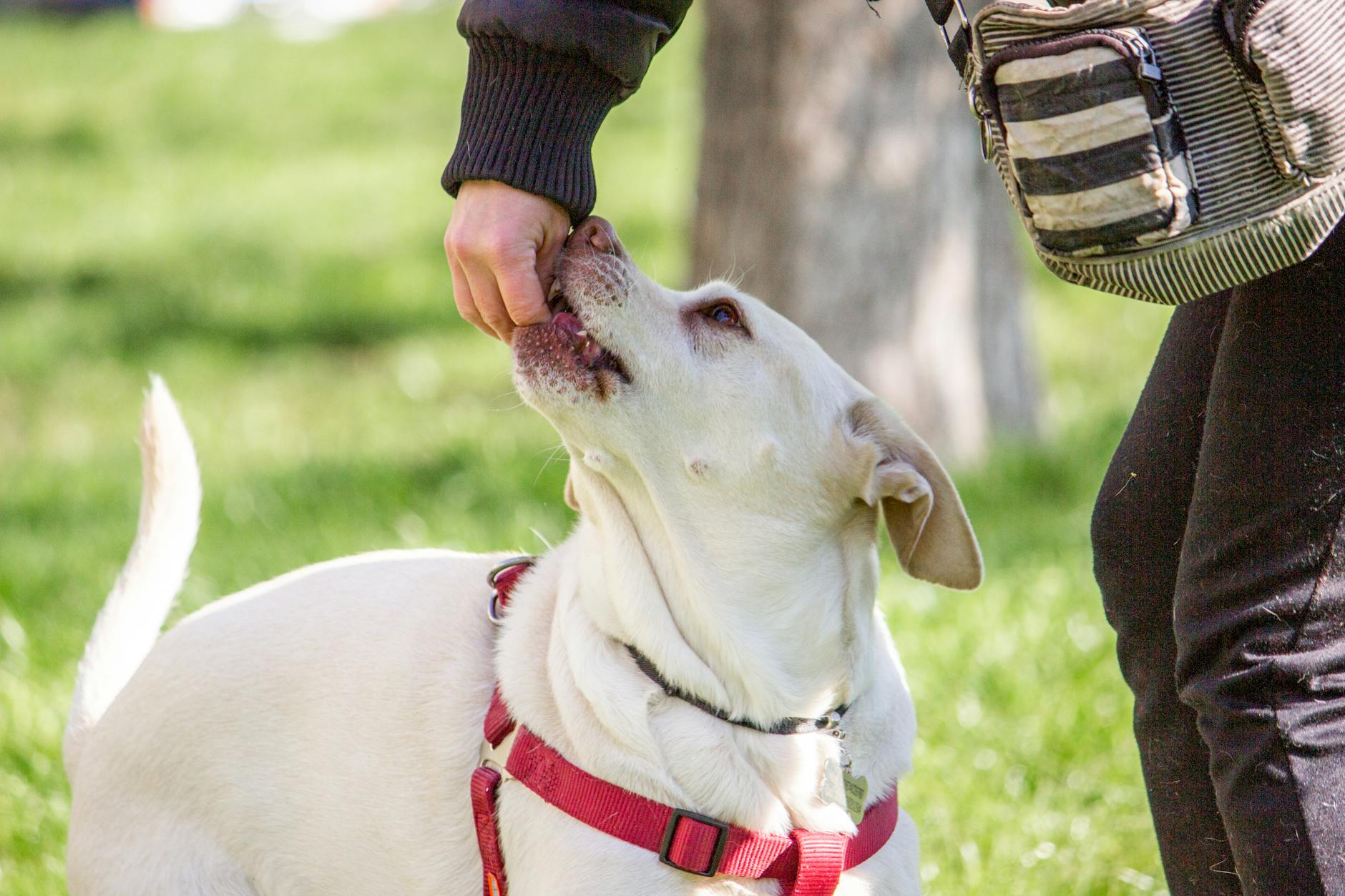
“Training” at this age doesn’t mean obedience drills or hour-long sessions. It means consistently responding to your puppy’s behavior in ways that reinforce what you want and ignore what you don’t. When your puppy sits, you reward it. When they jump up, you turn away. These responses are training, even if they don’t feel formal.
Where the “Wait Until 6 Months” Myth Came From
The idea of waiting until 6 months traces back to traditional dog obedience culture, which relied on correction-based methods — choke chains, leash pops — that were genuinely inappropriate for young puppies. So the advice was to wait. That origin makes sense in context. But why positive reinforcement works better than corrections for puppies is exactly why force-free training using food rewards is safe and effective from 7 to 8 weeks onward, and there’s no reason to delay.
Vaccinations don’t change this timeline either. You don’t need to take your puppy to a dog park to train them. Indoor sessions — in your kitchen, your living room, your backyard — are completely safe from day one. The puppy training age window opens early, and the earlier you step in, the better.
The Critical Socialization Window and Why It Matters for Training
Socialization is the process of introducing your puppy in a positive, controlled way to the people, sounds, environments, surfaces, and animals they’ll encounter throughout their life. It’s distinct from obedience training, but it’s just as important — and the two are deeply connected.
The socialization window runs from roughly 3 to 12 weeks, with the most influential phase closing around 12 to 14 weeks. After that point, the window doesn’t slam shut — it tapers — but a puppy’s natural openness to new experiences starts to decrease, and unfamiliar things begin to trigger more caution.
Why Socialization Directly Affects Trainability
Here’s the link that doesn’t get explained enough: a puppy that is fearful of strangers, startled by traffic, or reactive toward other dogs cannot reliably focus on training cues in those environments. Fear and anxiety short-circuit learning. A well-socialized puppy is calmer in novel situations, recovers faster from mild stress, and can actually pay attention to you when it counts.
Socialization at this stage looks like short, positive exposures — not flooding your puppy with overwhelming experiences. Let them investigate a new surface at their own pace. Let a calm stranger offer a treat. Play a recording of city sounds at low volume while they eat. Small exposures, consistently positive, done often. By the time your puppy is 4 months old, this early effort pays dividends in every training session that follows.
When You Start Training a Puppy, What Should You Teach? A Simple Age-by-Age Timeline
8–10 Weeks
This is the foundation stage. Keep it simple and keep it fun.
- Name recognition — say the name, reward when they look at you
- Sit — lure with a treat held above the nose, reward the moment the bottom touches the floor
- Leash introduction — just wearing the collar or harness, getting used to the sensation
- Crate as a positive space — meals near the crate, treats tossed inside, door open at first
- Four paws on the floor — when the puppy jumps, attention disappears; when they’re on the floor, attention returns
Sessions should run 1 to 3 minutes, repeated 2 to 5 times per day. Brief and frequent is the rule at this age.
A clicker is a useful tool here — a button-style dog training clicker creates a precise bridge between the exact moment of the right behavior and the reward that follows, giving your puppy unambiguous feedback about what they just did correctly. Paired with a magnetic-closure treat pouch worn on your hip, it keeps your hands free and teaches your puppy to look to you for guidance rather than fixating on your hand, which prevents hand-chasing habits from forming early on.
10–16 Weeks
Build on the basics and keep socialization front and center.
- Down — lure from a sit position
- Early stay — duration only, 2 to 5 seconds, no distance yet
- Recall — short distances, extremely high-value reward, never used to end something fun
- Leash manners — following your movement, not pulling toward distractions
Socialization is still the primary goal during this window. Obedience skills matter, but a confident, curious puppy at 16 weeks is a better long-term training partner than a fearful one who knows five commands.
[LINK: puppy training session length article — link here when URL is confirmed in CMS]
4–6 Months
The puppy is physically and mentally more capable now. Start adding difficulty.
- Stay with added distance and mild distractions
- Recall proofed in low-distraction areas — backyard, quiet street
- Loose-leash walking basics — teaching the puppy to keep slack in the leash
- Generalization — practice known commands in new locations, not just at home
[LINK: puppy command sequence article — link here when URL is confirmed in CMS]
6–12 Months
This is the proofing stage — and also the adolescence stage, which can feel like a setback.
- Add real-world distractions to every command
- Begin fading constant treat rewards using variable reinforcement (rewarding every few repetitions rather than every single one)
- Expect some regression — a puppy that “knew” sit perfectly at 4 months may seem to forget it at 7 months. This is normal adolescent brain development, not evidence that early training failed.
What Actually Happens If You Wait Too Long to Start Training Your Puppy
Waiting doesn’t make training impossible. But it does make it slower and harder in three specific ways.
1. Habits harden. A puppy that jumps up at 8 weeks is easily redirected. A 6-month-old dog that has been jumping up for four months — and getting attention, even negative attention, for it — has a practiced, rewarded habit. Undoing that takes significantly more time than preventing it. [LINK: puppy biting troubleshooting article — link here when URL is confirmed in CMS — a direct example of what a practiced habit looks like by the time most owners seek help]
2. The socialization window closes. A dog that wasn’t positively exposed to novel people, sounds, and environments before 14 weeks is statistically more likely to react with fear or reactivity to those things as an adult. Reactivity and fearfulness are among the most common reasons dogs are surrendered to shelters — and among the most preventable.
3. The communication system doesn’t build the same way. Early training teaches your puppy how to communicate with you, how to look to you for guidance, and that interacting with you is rewarding. That relationship foundation — built through hundreds of small positive interactions in the first weeks — is harder to establish once other habits are already in place.
A dog trained at 6 months or later can absolutely become a well-behaved companion. It just requires more patience and consistency to work against patterns that have already formed.
Common Reasons Owners Delay — and Why None of Them Hold Up
These are understandable assumptions, not bad excuses. But they’re worth addressing directly.
- “I want them to enjoy puppyhood first.” Training done right is play. A 2-minute sit-for-a-treat game is fun, not work.
- “They’re too young to understand.” Research on operant conditioning — the science of how animals learn through consequences — shows puppies as young as 7 weeks can learn cue-response associations.
- “I’ll wait until after their shots.” Vaccinations and training are separate timelines. Indoor sessions are safe from day one.
- “I’ll take them to a class when they’re older.” Classes are valuable supplements, but the habits forming right now won’t wait for a class schedule.
- “My last dog turned out fine without it.” Many dogs do okay. But many more are surrendered, restricted, or living with preventable behavior problems that starting puppy training early would have addressed. Your dog deserves the odds working in their favor.
How to Start Puppy Training the Right Way From Day One
- Keep sessions short. One to 3 minutes at 8 weeks, no more than 5 minutes before 4 months. [LINK: puppy training session length article — link here when URL is confirmed in CMS]
- Use food the puppy actually wants. Training treats should be soft, small, and noticeably more exciting than regular kibble. The right treat makes or breaks early sessions — something like Zuke’s Mini Naturals soft dog training treats, which are pea-sized, low-calorie, and easy to break apart, gives you the high-value reward your puppy will genuinely work for without overfeeding across multiple sessions. [LINK: puppy training treat selection article — link here when URL is confirmed in CMS]
- One skill per session. Don’t cram. A single well-practiced repetition of “sit” is more valuable than three confusing attempts at sit, down, and stay in one go.
- End before disengagement. Stop on a success while the puppy still wants more. This keeps training associated with winning, not frustration. [LINK: puppy training focus and session recovery article — link here when URL is confirmed in CMS]
- Train where the skill needs to work. Don’t only practice in the kitchen and expect results at the vet’s office. Skills need to be practiced in the environments where they’ll actually be used.
- Everyone in the household uses the same cues. Inconsistency is the most common early training failure. If “off” means stay off the couch to one person and “down” means the same thing to another, the puppy is learning chaos, not commands.
Frequently Asked Questions
Can I train a puppy before all their vaccinations are done?
Yes. Indoor training is completely safe from day one. You don’t need a dog park or a group class to begin teaching your puppy. Avoid high-risk dog congregation areas until your vet confirms vaccination is complete, but the core work of when to start training a puppy has nothing to do with those environments. Your living room is all you need to begin.
Is 6 months too late to start training a puppy?
No — but habits have had more time to form, so expect the process to take longer and require more consistency. A puppy trained at 6 months can still become a well-behaved adult dog. The earlier you start, though, the easier the process is for both of you.
How many times a day should I train my puppy?
Two to five short sessions per day is ideal for young puppies. Brief and frequent beats long and occasional every time. At 8 weeks, aim for 1 to 3 minutes per session. As your puppy gets older and can focus longer, sessions can extend slightly — but frequency is more important than duration at this stage.
What’s the first thing I should teach my puppy?
Name recognition and sit. These two skills form the foundation for everything that follows. Name recognition teaches your puppy to pay attention to you; sit gives you a default behavior you can redirect toward in almost any situation.
Do I need a professional trainer, or can I do this myself?
Most puppy basics are owner-manageable. The skills covered in the 8–10 week and 10–16 week stages don’t require professional instruction to get started. A good puppy class adds socialization opportunities and real-time handler coaching, which are genuinely valuable — but they’re supplements to what you’re doing at home, not replacements for it. Start now, and add a class when one fits your schedule.
Conclusion
The answer to “when to start training a puppy” is straightforward: from the day your puppy comes home — typically 8 weeks old. Your puppy is already learning from every interaction. Your job is to make sure those early lessons are the ones you actually want them to learn.
The socialization window between 3 and 14 weeks is the most consequential period in your puppy’s behavioral development. Early puppy training doesn’t have to be formal or complicated — short, consistent, positive sessions of 1 to 3 minutes lay the foundation for everything that follows. Waiting allows habits to form and lets the socialization window narrow, both of which cost you more time and effort later.
Start small. Stay positive. Be consistent.
Where to go next: Now that you know when to start training a puppy and what the early weeks should look like, the natural next questions are what commands to teach first and in what order, how long each session should run for your puppy’s age, and which treats actually motivate your puppy to work. Each of those topics is covered in depth — follow whichever fits where you are right now.

Dog Behavior & Training