
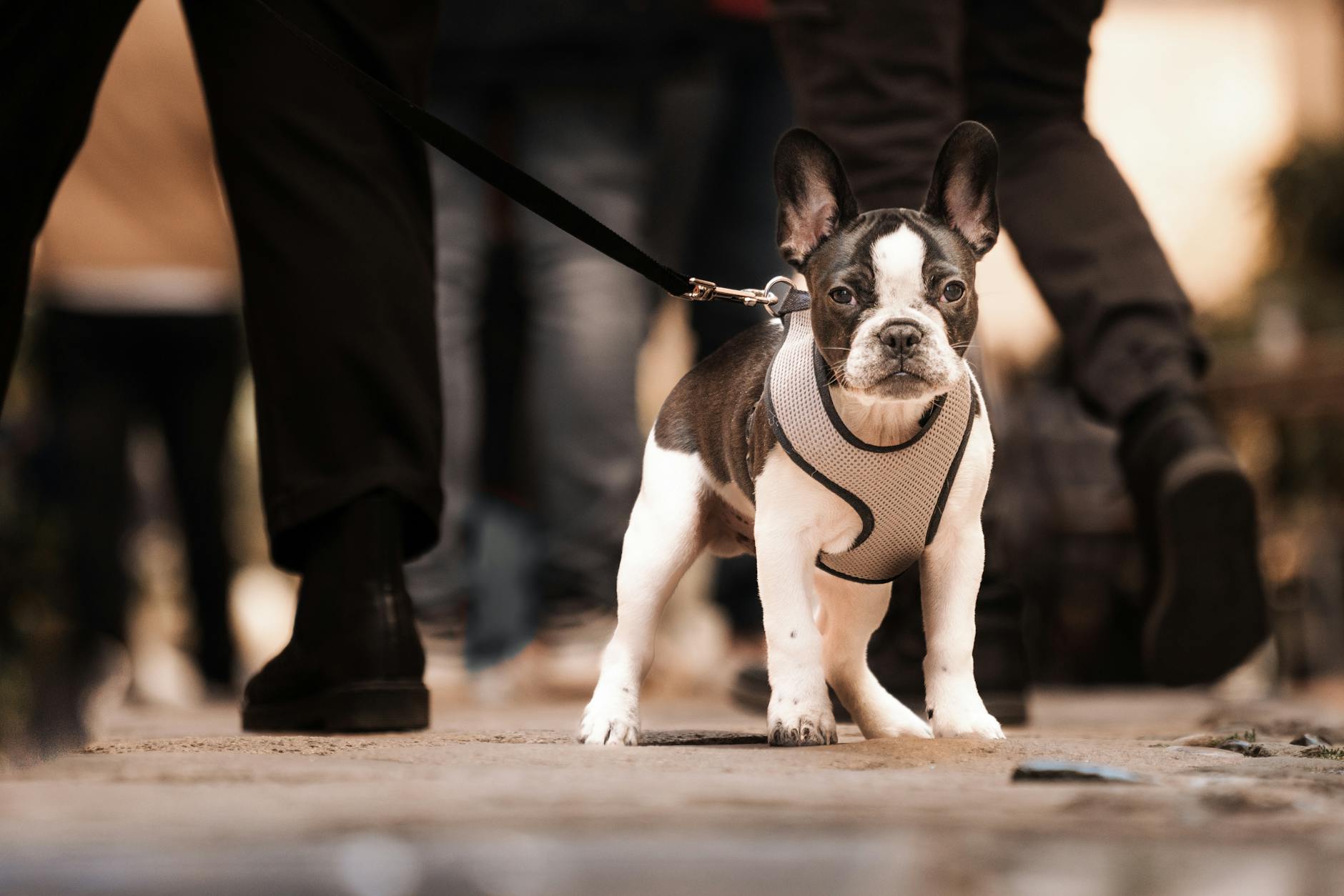
Most dog owners make the harness vs collar decision once — usually at the pet store, usually fast. But choosing between a dog harness vs collar for walking has real consequences for your dog’s neck, airway, and long-term comfort. Both options have genuine trade-offs. This article breaks down what each option does to your dog’s body on a walk, which situations favor each, and when using both at the same time is the right call. No filler — just what you need to choose the right setup for your dog.
Disclosure: This article contains affiliate links. If you purchase through these links, we may earn a small commission at no extra cost to you. As an Amazon Associate, we earn from qualifying purchases.
Why the Dog Harness vs Collar Question Matters for Safety
The collar sits on one of the most anatomically crowded areas of your dog’s body. The trachea (windpipe), thyroid gland, cervical vertebrae, and several significant nerves all run through the neck — directly under where a collar sits and where leash tension lands.
The concern isn’t only hard yanks. Even low-level, repetitive pressure from a dog who consistently leans into the leash can accumulate over time. For small dogs and brachycephalic breeds — dogs with flat faces like Bulldogs and Pugs — the margin for safe neck pressure is much smaller to begin with.
This isn’t a case for throwing every collar in the trash. It’s the reason this decision deserves more thought than most owners give it.
The criteria for this comparison:
- Safety under leash pressure
- Pulling behavior management
- Fit and security
- Breed-specific considerations
- Everyday practicality
What a Collar Does Well — and Where It Falls Short on Walks
Where collars work well
A flat collar is the right tool for carrying your dog’s ID tags and license. That’s its most important job, and it does it better than anything else. Every dog should wear one, regardless of what you clip the leash to.
For calm, leash-trained adult dogs who walk reliably at your side with a loose leash, a collar on walks is a reasonable option. Quick bathroom trips or low-intensity leash contact — where the leash barely goes taut — present minimal risk for a healthy adult dog with no neck sensitivities.
See The Dog Gear Worth Buying — and the Stuff You Can Skip for more context on where collars earn their place in a dog’s everyday gear.
Where collars fall short
In practice, here’s where collars become a problem:
- Pulling dogs: Every lunge or sustained pull sends pressure directly into the trachea and surrounding neck structures. The collar was never built to handle the load a pulling dog creates.
- Brachycephalic breeds (Bulldogs, French Bulldogs, Pugs): These dogs already have compromised airways. Adding neck pressure from a collar makes a problematic situation genuinely risky.
- Small dogs: Breeds like Yorkshire Terriers, Chihuahuas, and Pomeranians have elevated tracheal collapse risk. Even moderate pulling through a collar creates meaningful pressure on a small, delicate trachea.
- Dogs with neck history: Any dog with a prior neck injury, cervical disc issues, or thyroid problems should not be walked on a collar.
- Dogs prone to eye pressure issues: Collar tension can increase intraocular pressure in susceptible dogs — a less commonly known but real concern.
Why a Harness Beats a Collar for Everyday Walking Safety
A harness moves the leash attachment point from the neck to the chest or back. That change distributes leash force across the chest and shoulders — areas built to handle physical load. It removes the neck from the equation entirely.
This is why a harness is the better choice for most dogs on most walks. If your dog pulls, leans, or lunges at any point during a walk, a harness keeps that force away from the trachea and cervical structures.
Harnesses are especially valuable for:
- Puppies under 12 months, whose skeletal structures and tracheas are still developing
- Pullers of any breed or size
- Small breeds, particularly those prone to tracheal collapse
- Brachycephalic dogs, for whom neck pressure is genuinely dangerous
- Senior dogs with reduced joint or structural resilience
For dogs that pull consistently, a front-clip no-pull harness adds an additional benefit. When the dog pulls forward, the front attachment point redirects their momentum to the side. This makes pulling physically less effective. A popular option for persistent pullers is the PetSafe Easy Walk Dog Harness, which is designed specifically to redirect pulling momentum sideways and works best when paired with leash-walking training. If you’re walking in warmer months, it’s also worth considering Best No-Pull Harnesses for Summer Walks: Lightweight, Breathable Options That Won’t Overheat Your Dog to keep your dog comfortable while still managing pulling. For dogs who walk calmly or are still being leash-trained, a padded back-clip harness for daily use is the simpler option.
That said, harnesses are not perfect. They can slip if sized incorrectly, cause chafing with poor padding or design, and require a more involved fitting process than a collar. Getting the fit right matters. If you’re not sure how to do that, How to Measure Your Dog for a Harness That Actually Fits walks through the process step by step.
One important clarification: a harness doesn’t replace a collar. It replaces the collar as the leash attachment point on walks. Your dog still needs a collar for ID tags.
Dog Harness vs Collar for Walking: Side-by-Side Comparison
| Criteria | Harness | Collar |
|---|---|---|
| Neck safety under leash pressure | ✅ No neck contact | ⚠️ Direct neck pressure |
| Distribution of force | ✅ Chest and shoulders | ❌ Concentrated on neck |
| Pulling control | ✅ Better (especially front-clip) | ❌ Limited without discomfort |
| ID tag attachment | ❌ Not ideal | ✅ Standard use |
| Ease of putting on | ⚠️ Varies by style | ✅ Simple |
| Fit security | ⚠️ Requires correct sizing | ✅ Easier to size |
| Best for pullers | ✅ Yes | ❌ No |
| Best for brachycephalic dogs | ✅ Yes | ❌ Avoid for walks |
| Best for calm, trained dogs | ✅ Still good | ✅ Acceptable |
The table tells most of the story, but here’s what it doesn’t capture: the collar’s advantages are mostly about convenience and ID tag use, not walking function. The harness wins on safety across nearly every walking scenario. The collar’s one clear win — ID tag attachment — isn’t a walking function at all. When you’re evaluating a dog harness vs collar for walking, the harness is the stronger option for the vast majority of dogs.
Which Dogs Need a Harness and Which Can Use a Collar for Walks
Use a harness for walks if your dog:
- Pulls on leash at all — even occasionally
- Is a puppy under 12 months
- Is brachycephalic (flat-faced: Bulldogs, Pugs, French Bulldogs, Shih Tzus)
- Is a small breed prone to tracheal issues — Yorkshire Terriers, Chihuahuas, Pomeranians, Maltese
- Has any history of neck injury, cervical disc problems, or thyroid issues
- Is a senior dog with reduced joint or structural resilience
- Is a sighthound (Greyhounds, Whippets, Salukis) — their narrow heads relative to their necks make collar escape a real risk, and a poorly fitted harness can slip too
A collar on walks may be acceptable if your dog:
- Walks calmly with genuine minimal leash tension — consistently, not occasionally
- Is a healthy adult with no neck, airway, or thyroid sensitivities
- Has been leash-trained to the point where the leash is rarely taut
To be clear: that last category is smaller than most owners assume. Many dogs that owners describe as “pretty good on leash” are still putting meaningful tension on the collar multiple times per walk. If you’re not sure which category your dog falls into, the harness is the safer default.
When comparing a harness or collar for everyday walks, the harness is the safer and more practical choice for most dogs. The collar stays essential — just not as the leash anchor.
When You Might Need Both — and How to Use Each One
Using a collar and harness simultaneously is normal, practical, and recommended. Here’s how each one functions:
- Collar: Stays on your dog at all times. It holds ID tags and license. This is non-negotiable for identification and legal compliance in most U.S. states. A well-fitted flat collar for ID tags is the baseline every dog needs. If your tags rattle and you want to cut down on noise, a tag silencer is a small but handy addition. For sighthounds prone to slipping a flat collar, a martingale collar — which tightens slightly under pressure but has a built-in stop to prevent over-tightening — is a better fit.
- Harness: Goes on for walks. Serves as the leash attachment point. It comes off afterward — most harnesses aren’t designed for all-day wear, and chafing develops with extended use. If you need something durable enough for hiking but comfortable enough for everyday use, a dual-clip everyday dog harness like the Ruffwear Front Range is a well-regarded option with both front and back attachment points.
For dogs actively in training, a dual-clip harness with front and back attachment points gives you flexibility. You can clip to the front for pulling correction and switch to the back for calmer walking sessions as the dog improves.
If your dog currently refuses to accept a harness, the answer isn’t to fall back on the collar for walks — it’s to work through the resistance. My Dog Hates Wearing a Harness — How to Get Them Used to It covers exactly that, with practical steps for desensitization.
The Bottom Line: Harness vs Collar for Walking
For everyday walks, a well-fitted harness is the safer choice for most dogs. It removes neck pressure entirely. It gives you better control without trading your dog’s comfort or safety to get it.
A collar remains essential — but its job is to hold ID tags, not anchor a leash.
The only dogs for whom a collar on walks is genuinely acceptable are calm, well-trained adults with no airway, neck, or thyroid vulnerabilities and a genuine loose-leash habit. That’s a narrow group.
Quick guidance by situation:
- Dog that pulls: Front-clip no-pull harness, full stop.
- Puppy, small breed, or flat-faced dog: Harness for every walk, collar for ID.
- Calm adult with no sensitivities: Collar on walks is acceptable, but a harness is still the safer default.
- Not sure which harness type fits your dog’s behavior: Start with clip position — front-clip for pullers, back-clip for calmer dogs. See the front-clip vs back-clip comparison to decide.
- Fitting is the sticking point: Start with How to Measure Your Dog for a Harness That Actually Fits before buying anything.
Choosing between a dog harness vs collar for walking becomes straightforward once you know what each option actually does. A harness does the walking job better for almost every dog. Let the collar do what it was made for: keeping your dog identified.
Frequently Asked Questions
Is it okay to leave a harness on all day?
No — most harnesses aren’t designed for all-day wear. Chafing and pressure point problems develop with extended use, especially around the armpits and chest. The collar stays on all day for ID. The harness goes on for walks and comes off when you get home.
Can a puppy wear a collar instead of a harness?
It’s not recommended. Puppies’ tracheas and skeletal structures are still developing. A harness is the safer choice during this stage, especially since most puppies pull before they learn loose-leash walking. Once training is solid and your dog walks without pulling, a collar on walks may be reconsidered — but the harness remains the safer option.
Does a harness encourage pulling?
This is a common concern, and the answer depends on the harness type. A back-clip harness allows a dog to use their body weight more effectively to pull — similar to a sled dog setup. A front-clip harness actively redirects a pulling dog to the side, making pulling less effective. The type of harness matters more than harness vs collar for this issue. If pulling is your main concern, a front-clip design is the right call.
What collar is safest if I don’t want to use a harness?
A flat buckle collar is the least harmful option for dogs with no collar sensitivities. For sighthounds prone to slipping out, a martingale collar is a better fit. Choke chains and prong collars are not safe alternatives — the risks they carry are not comparable to a standard flat collar or harness.
Can a small dog use a collar for walks?
Small breeds face elevated tracheal collapse risk. Even moderate pulling through a collar creates real pressure on a small, delicate trachea. A harness is strongly preferred for any small dog — especially one that pulls even occasionally. If your small dog currently walks on a collar, switching to a harness is one of the most straightforward improvements you can make.

Grooming, Care & Gear