Quick Answer: Floppy eared dogs get more ear infections because their ear flap (the pinna) acts like a lid over the ear canal, trapping heat and moisture that yeast and bacteria need to multiply. Summer makes the problem significantly worse by layering in humidity, water exposure, and heat — turning a structural disadvantage into an active one.
The Anatomy Behind Floppy Eared Dogs Ear Infections
To understand why floppy eared dogs get ear infections so often, start with basic anatomy — and one key difference from humans.
A dog’s ear canal is L-shaped. It runs vertically down from the ear opening, then turns horizontally toward the eardrum. That shape already makes dogs more prone to trapped moisture and debris than humans, whose ear canals run in a relatively straight line. Add a heavy ear flap on top, and you have a canal that is enclosed on all sides with almost no natural ventilation.
The pinna — that soft, drooping flap — functions like a lid. It covers the canal opening and dramatically reduces airflow in and out. Less airflow means moisture has nowhere to go. The result is a warm, dark, humid environment sitting right at the ear canal opening. That is exactly the condition that yeast (Malassezia) and certain bacteria (Pseudomonas, Staphylococcus) thrive in.
Compare that to a prick-eared dog — a German Shepherd, Siberian Husky, or Belgian Malinois. Their ears stand upright, the canal opening faces outward, and air circulates freely. Moisture evaporates. The environment stays drier. These breeds still get ear infections, but they do not face the same structural loading that floppy eared dogs do.
This is worth understanding clearly: floppy eared dogs ear infections are not caused by weaker immune systems or dirtier ears. The problem is a mechanical disadvantage built into their anatomy. The ear was never designed with ventilation in mind.
What Makes Summer Worse for Floppy Eared Dog Breeds
Summer does not create the ear infection problem — it accelerates it. The underlying anatomy does not change, but the conditions that feed that anatomy get significantly worse.
Swimming and water play are the biggest summer risk factor. Water enters the ear canal during a swim. Under a floppy ear, it has almost nowhere to drain or evaporate. It just sits there.
Ambient humidity adds to this even when the dog has not been swimming. On a muggy summer day, the moisture level inside a covered ear canal climbs without the dog going near water.
Heat is the third element. Warm temperatures speed up the growth of yeast and bacteria. In January, an ear canal may stay at a manageable level of microbial activity. In July, the same amount of moisture can be enough to tip things into infection territory.
There is also a fourth factor that does not get enough attention: allergen exposure. Summer means more time outdoors, more pollen, and more contact with grasses and molds. For dogs with environmental allergies, this inflames the skin lining of the ear canal. Inflamed tissue is easier for pathogens to colonize. This is a major reason why some dogs get recurring summer ear infections even when their owners are doing everything right. The allergen load drives the underlying inflammation, and the infection follows from that.
Which Floppy Eared Dogs Get Ear Infections Most Often
The breeds most commonly seen with recurring ear infections are not struggling because of some mystery unique to their biology. They share a combination of risk factors: heavy ear flaps, water-loving temperaments, coat types that trap debris, or known allergy tendencies — often more than one at once.
Breeds with the highest ear infection risk:
- Basset Hound — some of the heaviest, longest ear flaps of any breed; minimal airflow regardless of season
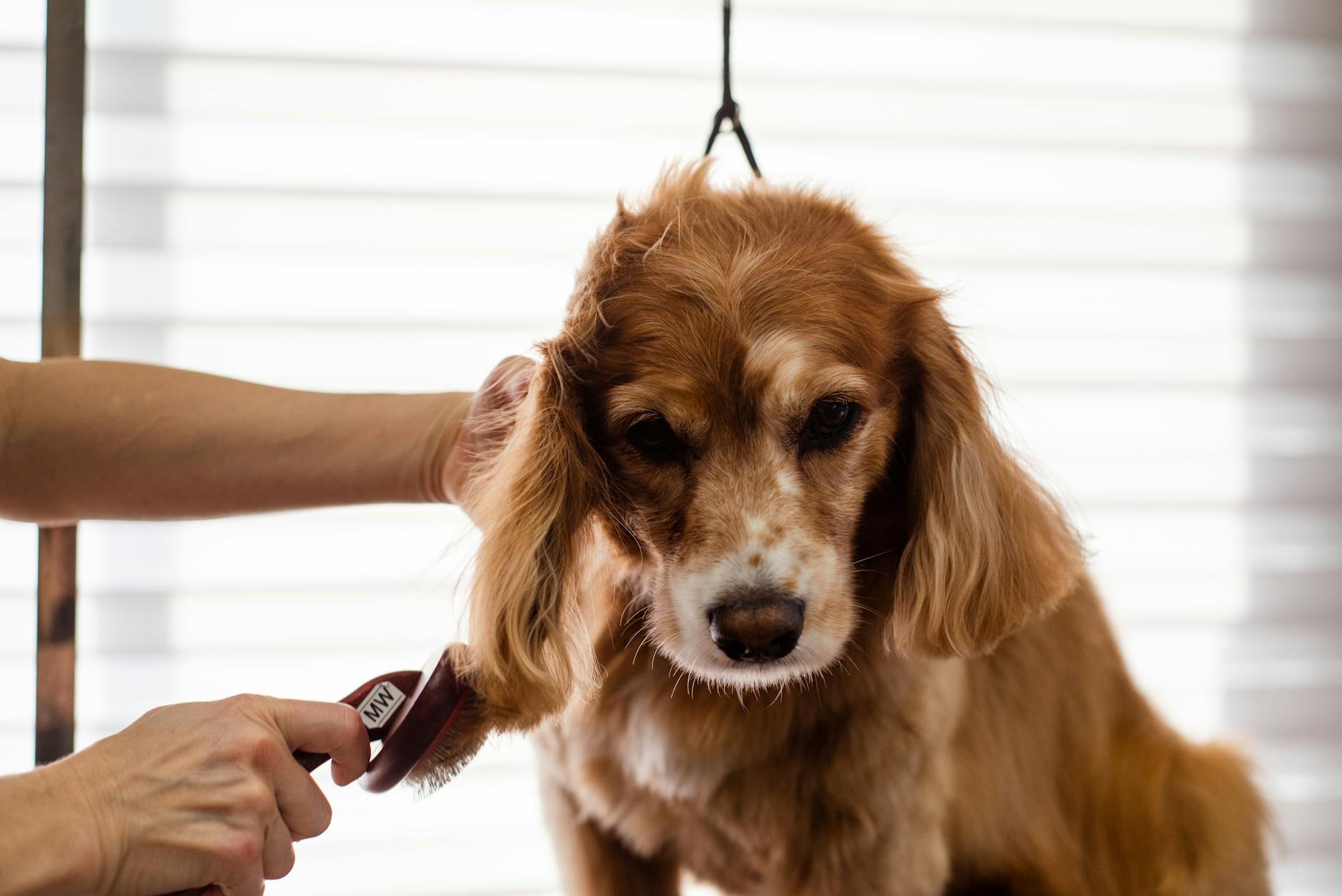
- Cocker Spaniel — heavy flap plus hair growing inside the canal itself, plus a well-documented allergy predisposition; arguably the highest-risk breed of all
- Golden Retriever — loves water, has a dense coat near the ear that traps moisture and debris, and is prone to environmental allergies
- Labrador Retriever — similarly water-obsessed, and Labs have a higher-than-average rate of food and environmental allergies
- Doodle mixes (Goldendoodles, Labradoodles, etc.) — the wavy or curly coat grows around the ear opening and traps moisture and debris right at the canal entrance; a commonly overlooked risk factor
- Bloodhound — extremely long ear flaps, often dragging; high-contact surface area for accumulating debris
- Beagle — moderate-length flap but a known allergy-prone breed, making ear infections a frequent secondary issue
The Cocker Spaniel deserves a closer look because it stacks every risk factor at once: a heavy, pendulous ear flap, hair that lines the canal and physically traps debris, and a coat and skin type that is strongly predisposed to allergic reactions. If there is a breed where year-round ear maintenance is non-negotiable, it is this one.
For Doodle owners: the curly coat right at the ear canal opening is easy to overlook because it is external. But it acts as a collection point for moisture and debris, which then sits directly at the entrance to the canal.
How to Prevent Ear Infections in Floppy Eared Dogs This Summer
Understanding the anatomy makes prevention intuitive rather than arbitrary. Every effective approach has the same underlying goal: reduce moisture and improve airflow.
Drying is more important than cleaning. After a swim or a bath, getting moisture out of the ear canal is the single highest-impact action you can take. Gentle drying — not deep probing — removes the water that would otherwise sit under the flap and feed infection. Even briefly lifting the ear flap after water exposure to allow some air circulation helps.
Routine maintenance cleaning removes the organic debris — wax, skin cells, environmental particles — that acts as food for yeast and bacteria. But there is an important caveat: over-cleaning strips the ear of its protective wax coating and irritates the canal lining, which can actually increase vulnerability. The goal is maintenance, not sterility. A good ear cleaner for dogs works by acidifying and drying the canal environment, making it less hospitable to pathogens. For more on how to evaluate and choose an ear cleaning solution, see the ear cleaner guide on this site.
Allergy management runs in parallel with ear hygiene. This is the part many owners miss. If your dog has a history of seasonal allergies, skin issues, or recurring ear infections despite good hygiene, the ear canal is likely being inflamed by the allergic response itself. Cleaning a continuously inflamed ear canal is like bailing out a boat with a hole in it. Addressing the allergy — with your vet’s guidance — is the other half of the prevention equation.
Warning Signs Your Dog’s Ear Problem Has Already Moved Past Prevention
Knowing when to stop home management and contact a vet is just as important as understanding prevention.
Signs that something is already wrong:
- Dog Shaking Head and Scratching Ears — What It Usually Means and When to Worry
- Holding the head tilted to one side
- A yeasty, musty, or foul smell coming from the ear
- Dark brown, yellow, or otherwise discolored discharge
- Visible redness or swelling at the canal opening
- Wincing, pulling away, or showing pain when the ear is touched or lifted
- Crusting around the ear flap or at the canal entrance
Once these signs are present, home cleaning can make things worse. Introducing liquid into an already-infected canal can push the infection deeper or cause additional irritation. This is a vet situation, not a cleaning situation.
In terms of urgency: mild scratching or a faint odor without other symptoms may warrant a vet call within a day or two. Visible swelling, obvious pain, any hearing changes, or a dog that cannot stop shaking its head — that is a same-day visit. Those signs can indicate a deep or severe infection, or a ruptured eardrum, which requires professional diagnosis before anything else happens to that ear.
How Often Should You Clean a Floppy Eared Dog’s Ears in Summer?
There is no universal answer, because frequency depends heavily on the individual dog.
A reasonable general framework for floppy eared dogs in summer:
- After every swim or bath — this is the most important trigger; do not skip it
- A routine check every one to two weeks — look for odor, debris, or redness; clean only if warranted
Dogs with a history of recurrent ear infections may need more frequent maintenance. What that schedule looks like is worth discussing with your vet, because it depends on what has been driving the infections — anatomy, allergies, or both.
One common instinct worth correcting is the urge to clean more aggressively on the theory that cleaner is always safer. Over-cleaning is a real problem. It removes the protective wax that lines the canal, irritates the skin, and can leave the ear more vulnerable than it was before. The goal is to maintain a healthy environment — not to create a sterile one.
Worth repeating: cleaning is maintenance. If the ear already smells, looks red, or has discharge, cleaning is not the right next step. That is a vet call.
Frequently Asked Questions About Floppy Eared Dogs and Ear Infections
Why does my floppy eared dog keep getting ear infections even after treatment?
Recurring infections usually point to one of two things: an underlying allergy that is continuously inflaming the ear canal, or an incomplete round of treatment that did not fully clear the original infection. Because the anatomy never changes, the canal returns to its infection-prone conditions quickly after treatment ends. If your dog has had more than one or two infections in a year, talk to your vet about whether allergies are a factor.
Do all floppy eared dogs get ear infections?
No — many never do. Anatomy creates a structural risk, but it does not guarantee infection. Individual variation matters, and consistent maintenance significantly reduces the likelihood. Some floppy eared dogs go their entire lives without a single infection.
Is it the ear hair or the ear flap that causes infections in floppy eared dogs?
Both can contribute, but reduced airflow from the flap is the primary driver. The flap creates the enclosed, humid environment. Hair inside the canal — common in Cocker Spaniels — adds a secondary factor by physically trapping debris and slowing drainage. In most breeds, the flap is the bigger issue.
Can I prevent ear infections just by keeping my dog’s ears dry?
Moisture control is the single most important factor in floppy eared dogs ear infection prevention. But it is not the whole picture. Ear health also depends on the condition of the canal lining, whether allergies are present, and avoiding over-cleaning. Drying after water exposure is essential — it just works best as part of a broader approach.
At what point does a smelly ear need a vet instead of a home cleaning?
Any ear with discharge, significant odor, visible redness, or a dog that is shaking its head, scratching repeatedly, or showing pain needs a vet — not a home cleaning. Once infection has set in, cleaning can make things worse by pushing the infection deeper. A faint, mild smell without other symptoms may be worth monitoring for a day or two, but when in doubt, call your vet.
Do floppy eared dogs need their ears cleaned differently than prick-eared dogs?
The technique is the same, but the schedule is different. Floppy eared dogs need more frequent attention — especially in summer and after any water exposure — because their anatomy does not allow the natural evaporation and airflow that keeps prick-eared breeds’ canals drier. The maintenance bar is simply higher.
The Bottom Line
Floppy eared dogs are not inherently unhealthy — they are anatomically disadvantaged in one specific way. Their ear flap reduces airflow to a canal that is already enclosed by its L-shaped structure. Add summer humidity, swimming, heat, and allergen exposure, and the conditions for floppy eared dogs ear infections become very easy to meet.
The breeds at highest risk — Cocker Spaniels, Basset Hounds, Golden and Labrador Retrievers, Doodle crosses — tend to combine that ear structure with water exposure, coat types that trap debris, or allergy tendencies. Often all three at once.
Understanding the mechanism is what makes prevention feel logical rather than like a checklist. Reduce moisture, support airflow, manage allergies if they are in the picture, and recognize the signs that mean home care is no longer appropriate. That is the full picture.
Grooming, Care & Gear